
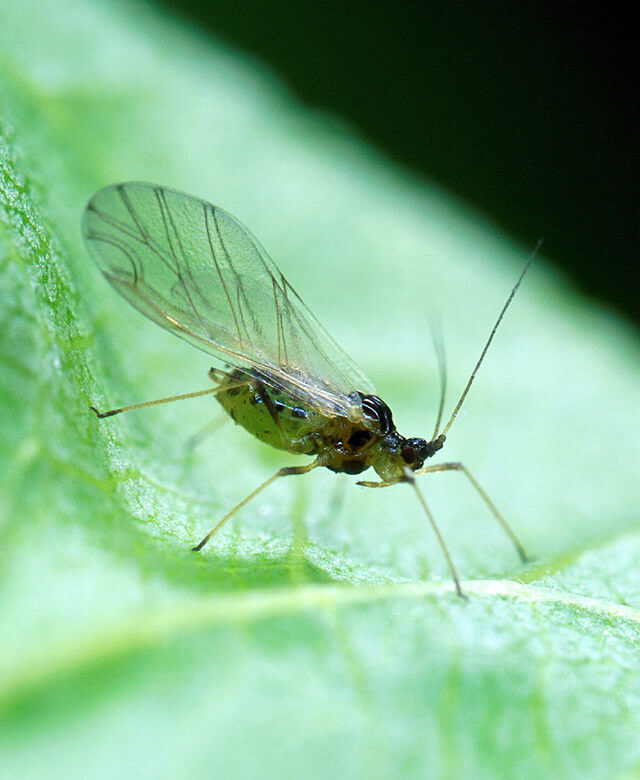
July can be a high-pressure month for greenhouse and protected-crop pest management. Western flower thrips (Frankliniella occidentalis) can damage crops directly through feeding and oviposition, and it is also associated with serious plant-virus risk. Aphid complexes, including green peach aphid (Myzus persicae), add a second monitoring challenge because aphids can build quickly in warm protected systems and contribute to virus-vector pressure.
This seasonal brief is not a single outbreak alert. It is a calendar-driven IPM prompt: when greenhouse conditions favor rapid pest population growth, monitoring and behavior-based tools should be active before pressure becomes difficult to manage.
Why It Matters
EPPO and CABI background sources identify Frankliniella occidentalis as a globally important pest of protected and field-grown crops. In protected cropping, thrips pressure can escalate quickly because generations overlap, pests hide in flowers and young tissue, and crop movement or plant material can spread infestations between production areas.
Aphid pressure matters for a different reason. Myzus persicae is a broad-host aphid and a known plant-virus vector, so even moderate aphid activity can justify closer monitoring in virus-sensitive crops. For growers, the combined risk is practical: thrips and aphids both require frequent inspection, trap review, and integrated decisions rather than a spray-only response.
How the Pheromone Strategy Works
For western flower thrips, aggregation pheromone components can improve trap attraction and monitoring sensitivity. In higher-density programs, trap-based attraction may also support mass trapping when local validation confirms the crop, trap type, lure format, and deployment density.
For aphids, (E)-beta-Farnesene is an alarm pheromone component used in repellent-oriented and push-pull IPM strategies. It should be positioned as a behavior-based tool that works alongside monitoring, biological control, sanitation, exclusion, and targeted chemistry. It is not a standalone control claim.
The ECOPHERO Solution
ECOPHERO supplies active ingredients for thrips monitoring and aphid push-pull programs:
- Neryl (S)-2-methylbutanoate - CAS 51117-19-2
- (R)-Lavandulyl acetate - CAS 25905-14-0
- (E)-beta-Farnesene - CAS 18794-84-8
Mode: Monitoring / mass trapping / push-pull / repellent-oriented IPM
Application: Western flower thrips aggregation pheromone traps; aphid alarm pheromone for push-pull programs
Catalog matching is direct for the listed targets. CAS 51117-19-2 and CAS 25905-14-0 both target Frankliniella occidentalis. CAS 18794-84-8 targets Myzus persicae and Aphis gossypii. ECOPHERO can support standard purity requirements, custom ratios, and project-specific synthesis requests after the target pest and application format are confirmed.
Deployment Notes for July Programs
For thrips, trap placement should account for crop height, flowering stage, vents, entrances, propagation areas, and previous hot spots. For aphids, push-pull or repellent-oriented strategies should be integrated with crop scouting and biological control plans rather than evaluated only by short-term insect counts.
Blend ratio, dispenser format, trap density, replacement interval, and compatibility with beneficial insects should be validated locally. For virus-sensitive crops, teams should document pest pressure trends and plant symptoms separately so that monitoring data can guide earlier decisions.
ECOPHERO Capability
ECOPHERO manufactures pheromone active ingredients from gram to ton scale and supports custom synthesis for commercial pest monitoring and IPM programs. For thrips or aphid projects, contact ECOPHERO with the pest name, CAS number, purity target, expected quantity, and formulation requirement for a quote, lead time, and specification.
Sources
- EPPO Global Database - Frankliniella occidentalis
- CABI - Frankliniella occidentalis
- CABI - Myzus persicae
- Image: Myzus persicae, Scott Bauer / USDA Agricultural Research Service, public domain; attribution not required.

