
On September 1, 2026, the U.S. Department of Agriculture's Animal and Plant Health Inspection Service (APHIS), working with the California Department of Food and Agriculture (CDFA), expanded the citrus greening quarantine in parts of California. The APHIS program update, posted September 2, records two additions: one square mile in the Santa Paula quarantined area of Ventura County and 10 square miles in Riverside and San Diego Counties.
The Ventura County addition affects 151.7 acres of commercial citrus. The combined Riverside and San Diego Counties addition affects a further 121.5 acres of commercial citrus. Those figures describe the commercial acreage affected by the quarantine expansions; they should not be read as estimates of infected acreage or of the total area in which the disease occurs.
APHIS said the federal expansion parallels an intrastate quarantine that CDFA established on July 15, 2026. The agency linked its action to plant tissue samples collected from residential properties that tested positive for Candidatus Liberibacter asiaticus, the causal agent of Huanglongbing (HLB). The update therefore documents a dated regulatory response to positive plant-tissue detections, rather than a general forecast of future disease pressure.
Why Huanglongbing is a serious concern
The APHIS citrus greening and Asian citrus psyllid resource describes citrus greening, also called Huanglongbing or HLB, as a bacterial infection of citrus plants and one of the world's most serious citrus diseases. APHIS states that there is no cure and that most infected trees die within a few years.
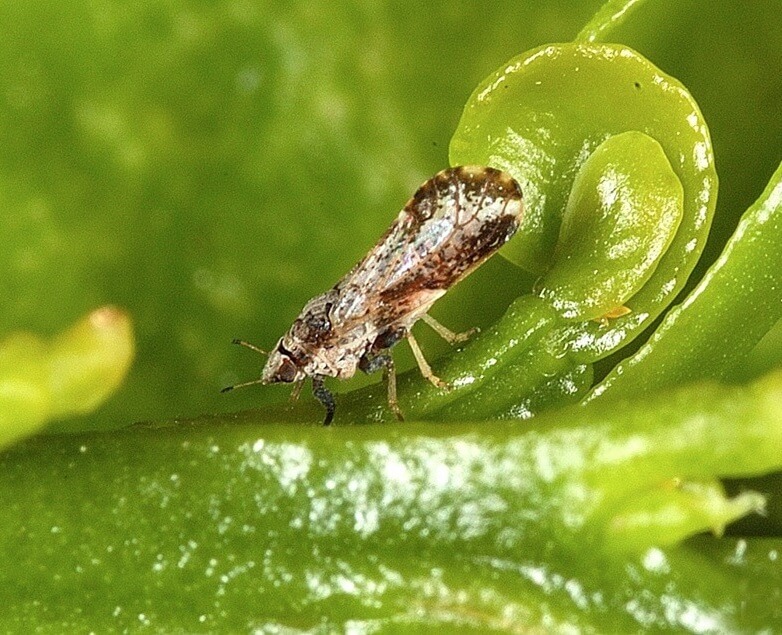
In the United States, APHIS identifies the Asian citrus psyllid (Diaphorina citri Kuwayama) as the insect that spreads citrus greening. Its background resource says the disease is found throughout Georgia, Florida, Puerto Rico, and the U.S. Virgin Islands, as well as in parts of Alabama, California, Louisiana, South Carolina, and Texas. This national context does not change the scope of the September California action: the new APHIS notice specifically concerns additions in the Santa Paula area and in Riverside and San Diego Counties.
The distinction between the insect vector, the bacterial agent, and the regulated disease area matters. D. citri is the vector named by APHIS; Candidatus Liberibacter asiaticus is the causal agent detected in the residential plant samples; and the quarantine expansion is the safeguarding response described in the program update. Keeping those roles separate supports clear surveillance records and avoids treating a vector observation by itself as proof that a plant is infected.
What the federal action governs
APHIS is applying safeguarding measures under 7 CFR 301.76 through 301.76-11 and associated Federal Orders. According to the agency, those measures govern interstate movement of regulated articles from quarantined areas and are intended to help prevent HLB from spreading to areas that are not currently infested.
For growers, nurseries, handlers, carriers, and other affected businesses, the official APHIS and CDFA requirements remain the controlling instructions. A monitoring result, product specification, or supplier statement does not replace a regulatory determination or authorize movement of regulated articles. Operations connected to the affected areas should use the official notice and applicable orders when determining their obligations.
The ECOPHERO catalog connection
ECOPHERO's catalog directly associates Nonanal with the Asian citrus psyllid, Diaphorina citri. The catalog identifies Nonanal by CAS 124-19-6 and lists D. citri among its target pests. This is a direct catalog match between the named pest and the ingredient; it is not evidence that Nonanal is part of the APHIS quarantine requirements, that APHIS recommends a particular lure, or that a specific monitoring setup satisfies federal or state rules.
For teams evaluating semiochemical materials in work involving D. citri, the catalog match provides a clear starting point for a technical or procurement inquiry. Project requirements—such as the intended research or monitoring context, specification, formulation, and local regulatory constraints—should be assessed for the particular program. The September APHIS update itself does not describe a lure, trap design, application rate, or field protocol.
Monitoring alongside regulatory safeguards
The quarantine expansion underscores the need to keep pest surveillance, plant-disease testing, and movement controls connected but distinct. Monitoring can contribute information about the insect vector, laboratory testing establishes the plant-tissue result described by APHIS, and official quarantine measures govern regulated movement. Each serves a different purpose in the response framework.
ECOPHERO can provide information about catalog-listed Nonanal (CAS 124-19-6) for D. citri-related inquiries. Contact ECOPHERO with the target pest, project context, required quantity, and specification needs to discuss availability and technical documentation. Regulatory decisions and operational compliance should continue to follow APHIS, CDFA, and other applicable authorities.
Sources
- USDA APHIS Program Update DA-2026-33, “APHIS Expands the Citrus Greening (Huanglongbing) Quarantined Area in California”: https://www.aphis.usda.gov/news/program-update/aphis-expands-citrus-greening-huanglongbing-quarantined-area-california-9
- USDA APHIS, “Citrus Greening and Asian Citrus Psyllid”: https://www.aphis.usda.gov/plant-pests-diseases/citrus-diseases/citrus-greening-and-asian-citrus-psyllid
- Cover image: David Hall, U.S. Department of Agriculture, Agricultural Research Service. Public domain: https://commons.wikimedia.org/wiki/File:Asian_Citrus_Psyllid_adult.jpg
