
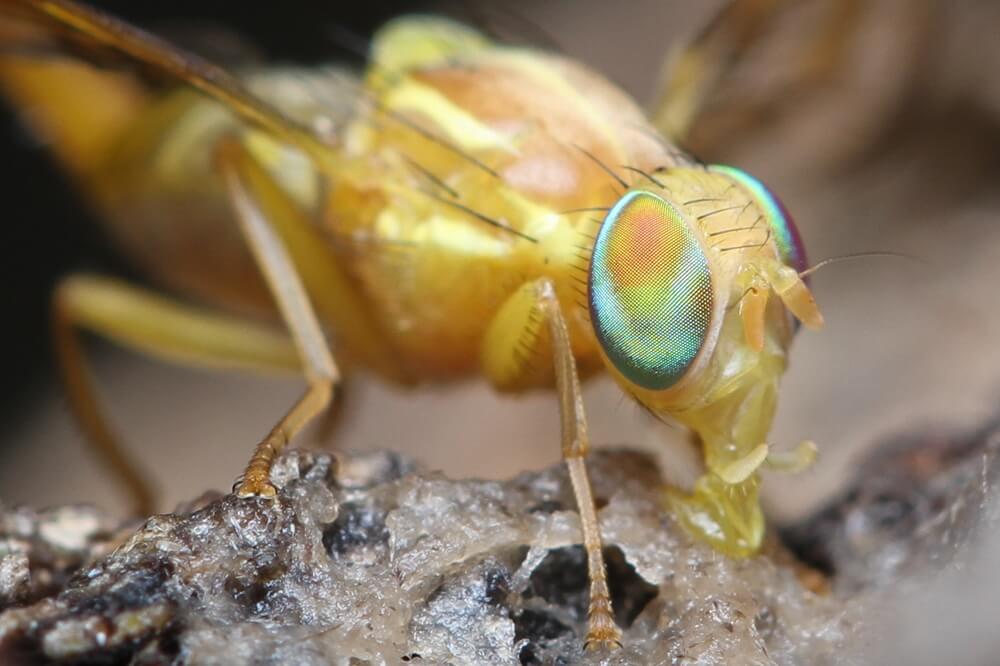
A sequence of Mexican fruit fly detections in residential trees preceded an expansion of the La Mesa quarantine in San Diego County, California. In notice DA-2026-36, dated September 23, 2026, the U.S. Department of Agriculture's Animal and Plant Health Inspection Service (APHIS) announced the expansion in cooperation with the California Department of Food and Agriculture (CDFA). The notice described a quarantine covering 173 square miles, including 338.5 acres of commercial agriculture.
The reported detections involved Anastrepha ludens, the species identified as Mexican fruit fly in the EPPO Global Database. APHIS described the population as transient and said the agencies were working toward eradication through program guidelines for survey, treatment and regulatory actions. The September 23 notice records an ongoing response, with no announcement that eradication had been completed.
From Spring Valley to La Mesa
The chronology began with a June 4 detection of a wild mated female in a trap placed in an avocado tree on residential property in Spring Valley. CDFA established the Spring Valley quarantine on June 16. At that stage, the area covered approximately 76 square miles and contained 22.5 acres of commercial agriculture.
A second detection, on June 12, involved a wild mated female caught in a trap in a residential grapefruit tree in El Cajon. CDFA expanded the Spring Valley quarantine on June 18. The amended area covered approximately 111 square miles and included 338.5 acres of commercial agriculture, with avocado, citrus, stone fruit and tomatoes among the crops described by APHIS.
The notice then traces a further change to an August 4 detection in a trap in a tangelo tree on residential property in La Mesa. On August 14, CDFA merged the La Mesa and Spring Valley quarantine areas under the La Mesa name. The September notice reported the resulting 173-square-mile area, while the commercial agricultural acreage remained 338.5 acres. These dates distinguish the individual trap detections and state actions from the later dated APHIS notice.
Why the host context matters
The combination of residential trap locations and commercial agriculture within the quarantine gives this report relevance beyond a single orchard. However, the crop acreage describes land inside a regulatory boundary. It does not measure infested acreage, and a fly caught in a trap in a tree does not establish that the fruit on that tree was infested.
For species-level context, EPPO's host database lists Mangifera indica and Citrus reticulata as major hosts of A. ludens. EPPO explains that its host categories are qualitative assessments and remain indicative. Those entries provide background on the pest; they do not establish which crops were infested in San Diego County. The distinction is particularly relevant when reading the notice's list of crops within the quarantine alongside the locations of trap catches.
What the notice establishes about monitoring
Trapping features directly in the reported sequence: each detection described by APHIS preceded a state quarantine action. The notice does not identify the chemistry used in those traps. It therefore provides no basis for attributing the catches to a particular pheromone, attractant or commercial lure.
APHIS also reported safeguarding measures and restrictions on interstate movement of regulated articles, intended to limit spread within the United States and prevent entry into foreign trade. These measures form part of the response described in the September 23 notice. The account connects detection, survey, treatment and regulatory action without specifying a lure formulation or a deployment protocol for readers to adopt.
ECOPHERO support for monitoring research
For teams exploring Mexican fruit fly monitoring research, ECOPHERO can support semiochemical literature review and monitoring-program design and field-validation coordination. This support concerns research and validation; it does not establish a tested lure for A. ludens. ECOPHERO has no approved catalog product match for this species, and the APHIS notice identifies no ECOPHERO involvement in the official response.
Contact ECOPHERO with the pest name and your monitoring challenge to discuss semiochemical literature review or monitoring-program design and field-validation coordination.
