
Australia's Xylella freedom claims have drawn on surveillance information brought together through AUSPestCheck. In a report dated 30 September 2026, Plant Health Australia (PHA) described how government and industry data collected through Budstick Blitz activities helped substantiate those claims. The Department of Agriculture, Fisheries and Forestry (DAFF) used the evidence to support national pest freedom claims, with implications for market access arrangements with the European Union.
The report concerns evidence of pest absence. It describes the use of surveillance already collected across participating organisations and brought into a shared system. PHA's account names Xylella at genus level, represented here as Xylella spp.; it does not announce an Australian detection or identify a newly detected species. Keeping that context clear matters when interpreting both the surveillance achievement and the preparedness work surrounding it.
Why vector preparedness matters
DAFF's Xylella and exotic vectors profile identifies Xylella as exotic to Australia and describes local spread through insect vectors. That relationship gives insect-vector preparedness a place alongside discussion of the bacterial plant disease. It also explains why a story about national pest freedom can be relevant to organisations considering how to frame future vector-monitoring work.
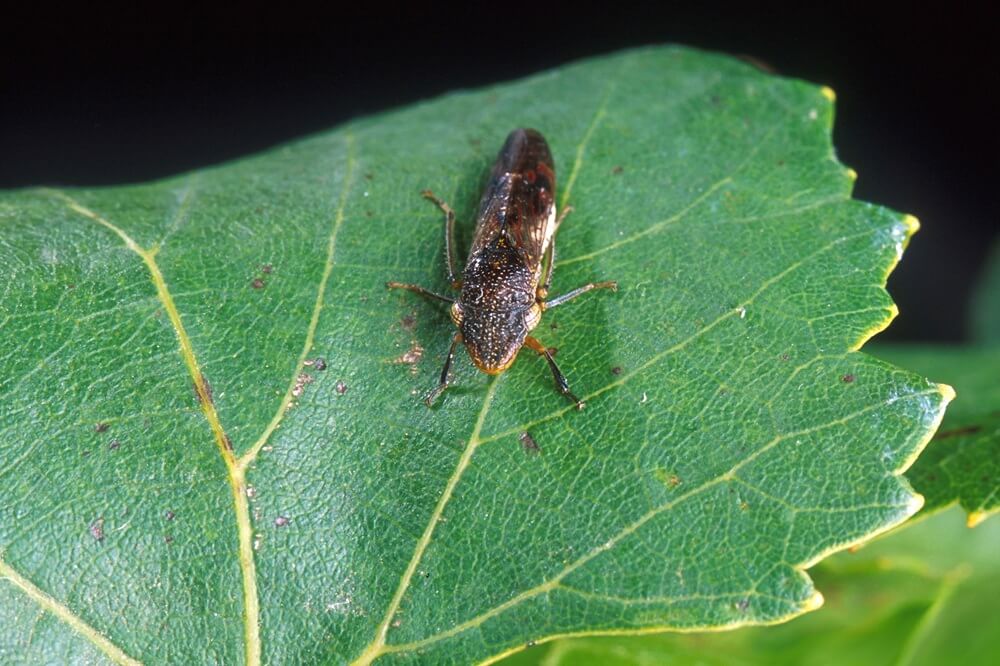
DAFF identifies the glassy-winged sharpshooter, Homalodisca vitripennis, as an exotic vector. The photograph accompanying this article depicts that insect as background illustration. It is not a photograph of an Australian detection. The insect's species identification belongs to this background context; the PHA surveillance report remains a genus-level Xylella story.
Where semiochemical review fits
A bacterial disease is not a pheromone-lure target. Any semiochemical inquiry in this context concerns insect vectors and the evidence relevant to monitoring them. Moving from a disease-preparedness question to a vector-monitoring proposal therefore requires a clearly defined target and a careful reading of the available research.
For organisations exploring that question, the starting point can be an inquiry into the literature and the proposed monitoring purpose. Such an inquiry does not establish that an effective lure exists for the target insect. Nor does the relevance of insect vectors to Xylella transmission, by itself, establish a product recommendation or a field-proven monitoring solution.
ECOPHERO support for a defined inquiry
ECOPHERO can support semiochemical literature review and monitoring-program design and field-validation coordination for Xylella insect-vector preparedness. These capabilities provide a way to discuss the research question and planning needs before making a product decision. The scope is evidence review and monitoring-program planning; no catalog-listed Xylella-vector lure is being offered here.
A useful discussion begins with the insect of interest, the monitoring challenge and the question a proposed field evaluation would need to address. Literature review and field-validation coordination can be considered within that defined scope, without treating an inquiry as evidence of lure efficacy. This support is separate from the AUSPestCheck work reported by PHA; ECOPHERO's involvement in that platform or the Budstick Blitz activities is not established.
Reading surveillance evidence in context
PHA operates AUSPestCheck and reports that the system holds more than 12 million surveillance records. This is a database-wide total, not a count of Xylella samples or Xylella-specific observations. The scale of the platform and the particular evidence used for a freedom claim are distinct pieces of information.
The platform brings government and industry surveillance information together with data governance and access controls. PHA describes its use in surveillance planning and in supporting evidence of pest absence. In the Xylella example, the practical outcome reported is the use of pooled information to support national freedom claims and European Union market access arrangements for exposed industries.
For vector-preparedness discussions, that example keeps attention on the purpose of monitoring and the evidence it is intended to provide. ECOPHERO's available contribution remains the defined literature-review and planning support described above. To discuss that scope, contact ECOPHERO with the insect-vector name and the monitoring challenge you want to examine.
Sources
- Plant Health Australia: AUSPestCheck provides evidence for Xylella freedom claims — report dated 30 September 2026.
- Australian DAFF: Xylella and exotic vectors — background on exotic status and insect vectors.
