
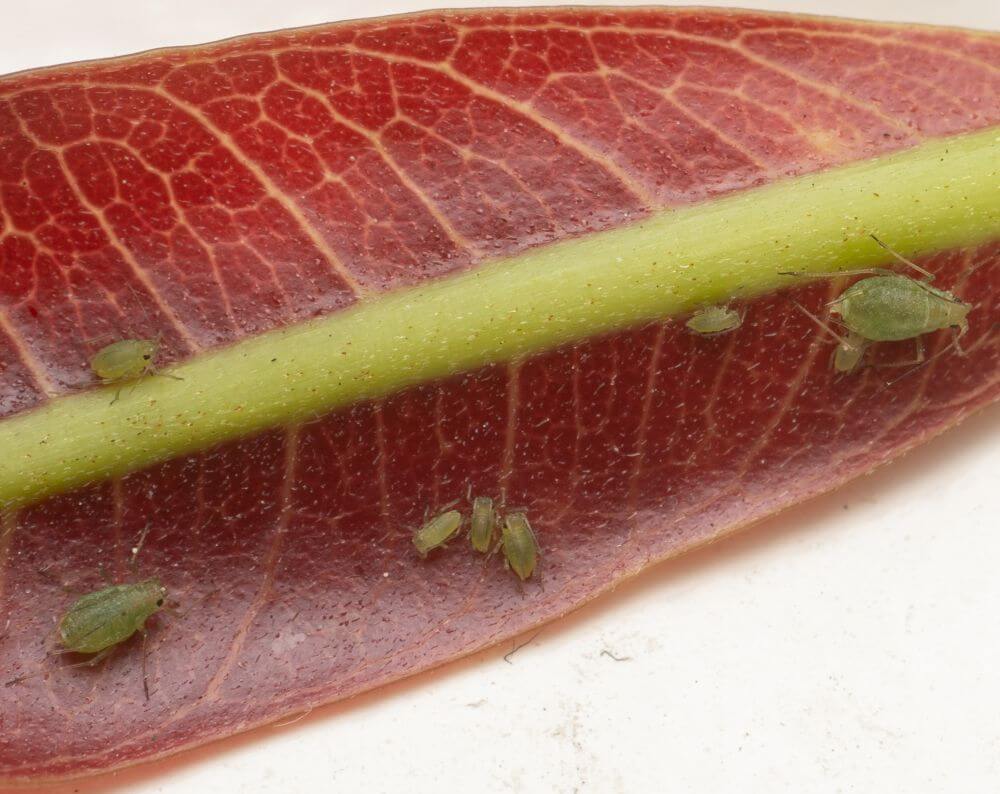
A controlled study using green peach aphids reported a 38–56% reduction in tested plant-virus transmission rates after the insects first acquired an engineered construct. The finding concerns interference with transmission: the research approach aims to prevent aphids from acting as vectors rather than eliminate them. It offers an experimental direction for investigating virus spread, while leaving commercial spray performance and field efficacy unestablished.
HortiDaily covered the work on November 11, 2026, following a CSIC release dated November 5. The original study was first published in Annals of Applied Biology on October 9, 2026, under DOI 10.1111/aab.70161. Those dates describe a research publication and subsequent reporting. They do not mark a newly detected pest outbreak or the launch of an approved crop-protection product.
What the experiments tested
The primary study used Myzus persicae as the aphid vector in controlled transmission experiments involving turnip and zucchini. AphID identifies this species by the common names green peach aphid and peach potato aphid. Using the scientific name matters when relating a study to pest information or a catalog entry: the experiment concerns an identified vector species, and the result should remain attached to that experimental context.
The reported reduction followed prior acquisition of the engineered construct, before virus acquisition. That sequence is part of the evidence behind the result. A percentage drawn from this setup cannot be treated as a general prediction for any way of applying the material, any crop, or any aphid-transmitted virus. The finding describes the tested transmission conditions and provides a basis for further investigation within those limits.
The study reported reductions of 38–56% for tested cucumovirus and potyvirus transmission. This is a reduction in transmission rates under the experimental conditions. It does not establish complete prevention, aphid mortality, a corresponding percentage increase in crop yield, or protection across a growing season. Those would be different outcomes requiring their own evidence. For readers assessing the work, keeping the measured endpoint explicit is as important as retaining the reported numerical range.
A result about the vector's role
The research asks whether the aphid's role in carrying viruses can be interrupted. That focus gives the report a specific meaning for crop-protection discussions: a transmission endpoint and an insect-control endpoint answer different questions. A result about one should not be presented as proof of the other. Here, the supported result is reduced transmission in the controlled tests after prior construct acquisition.
The Madrid, Spain connection reflects the research institutions and controlled study context. It should not be read as a mapped outbreak location or as evidence of a new field incident. Likewise, zucchini appears here as a test host. The accompanying photograph of zucchini fruits illustrates that crop context; it does not show infected plants, experimental treatment, or the study's results.
Where ECOPHERO's catalog connects
ECOPHERO's catalog lists (E)-β-Farnesene, CAS 18794-84-8, with Myzus persicae among its target pests. The catalog identifies it as an aphid alarm pheromone. This establishes a species-level catalog connection to the vector used in the study and provides a relevant product reference for readers working on aphid-related questions.
That catalog connection carries no evidence that (E)-β-Farnesene is the engineered construct used in the experiments. The reported transmission reduction belongs to the research material and its tested acquisition sequence. It cannot be assigned to the catalog chemical. The study also does not establish registered use, field-proven virus prevention, or substitution of (E)-β-Farnesene for the experimental approach.
For readers considering the implications, the useful distinction is between a documented catalog target and a demonstrated experimental outcome. The former identifies ECOPHERO's listed relationship to the aphid species; the latter describes what the researchers measured with their construct. Keeping both precise allows the research to inform discussion without turning a promising controlled result into an unsupported product claim. The paper remains the reference for experimental efficacy, while the catalog match remains a separate reference for the named pheromone and pest.
For an ECOPHERO product inquiry, contact us with Myzus persicae and CAS 18794-84-8.
Sources
- HortiDaily exact candidate detail
- Original study, Annals of Applied Biology
- CSIC original news release
- USDA-supported AphID: Myzus persicae
