Böcekler

Cydia trasias

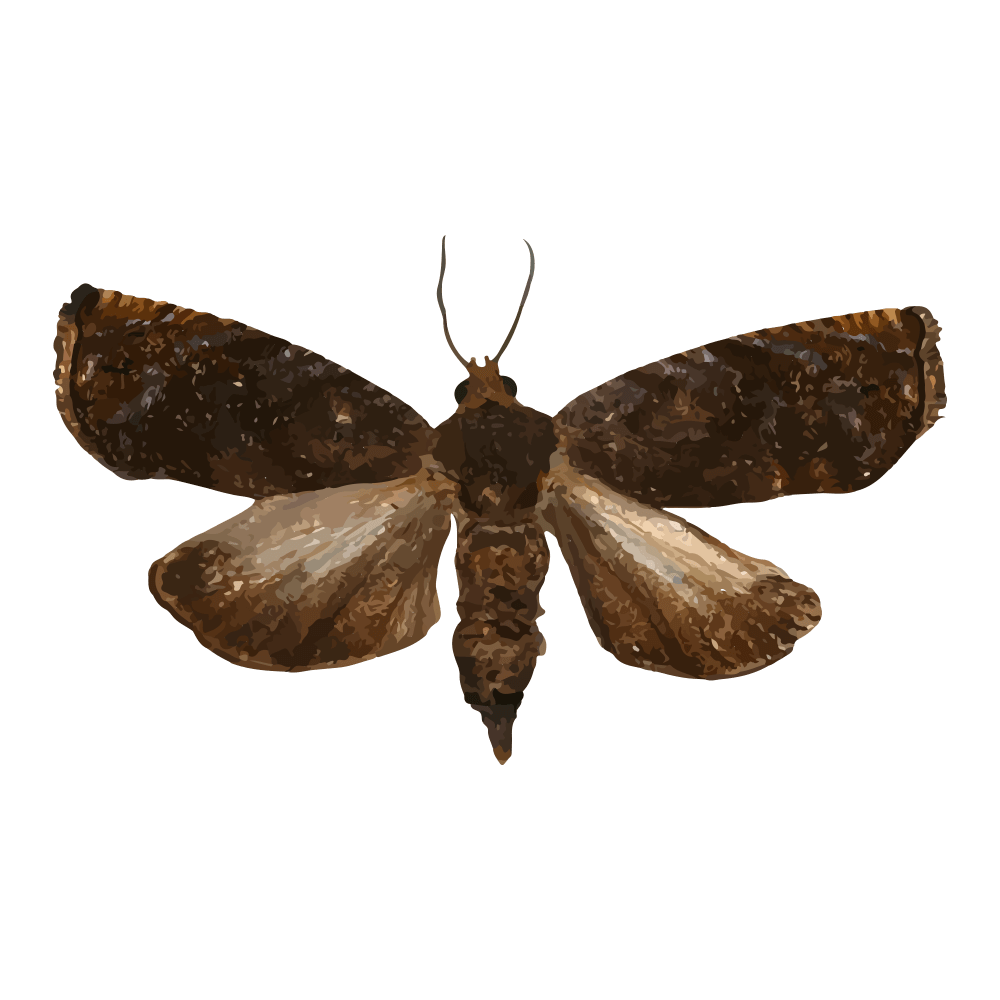
Walnut Fruit Moth (Cydia trasias)
Latince ad Cydia trasias
Yaygın ad Walnut Fruit Moth
Biyoloji This pest has 1-2 annual generations. Mature larvae overwinter in cocoons within bark crevices, fallen fruits, or soil. Overwintering adults emerge late April to early May. Eggs are singly laid on young walnut fruits. Hatched larvae bore directly into fruits, feeding on kernels; infested fruits often drop or ripen prematurely. Mature larvae pupate July-August, then emerge to reproduce, with partial second generations. Adults are nocturnal, phototactic (attracted to blacklight), and prefer fresh young fruits for egg-laying. Larvae rarely transfer post-boring, though fallen fruits may disperse larvae.
Zarar This pest primarily damages walnuts.
Dağılım bölgeleri East Asian Fruit Zone
İzleme Pheromone lures mimic natural sex pheromones to attract male insects into specialized traps for population monitoring and suppression. As a core IPM component, monitoring enables early risk detection and targeted control. Mass trapping reduces mating opportunities to curb offspring populations. Protocols: ●Use only with matched traps. ●15-45 traps/hectare,replace/replenish every 4-6 weeks. ●Wear gloves or wash hands with detergent when switching lure types. ●Refer to trap-specific hanging instructions.
Önerilen tuzaklar Delta Trap, Wing Trap

Literatür incelemesi

Semiokimyasal kanıt

Atıf yapılan yayınlar, bileşik ile tür arasındaki kesin ilişkiyi destekler. Formülasyon, oran, yükleme, salım hızı ve arazi dayanım süresi doğrulanmış bir cezbedici protokolüne bağlıdır ve burada çıkarım yapılmaz.

İletişime geçin

Ürün seçimi veya özel sentez projesini görüşmek için iletişim bilgilerinizi paylaşın. Katalog ürünü üzerinde anlaşılan spesifikasyona uymuyorsa kimya ekibimiz özel bir sentez yolu ve ölçek büyütme planını değerlendirebilir.