A Mediterranean fruit fly detection in a public space led to a quarantine covering 27.29 square miles in Old San Juan, San Juan Municipality, Puerto Rico. In an official notice posted on September 30, 2026, through the NAPPO Phytosanitary Alert System, the U.S. Department of Agriculture’s Animal and Plant Health Inspection Service (APHIS) reported the action taken with the Puerto Rico Department of Agriculture (PRDA).
The notice links the quarantine to detections on July 16: 19 male and three female Mediterranean fruit flies, or Medflies, were collected from three traps in tropical almond trees. The pest is identified as Ceratitis capitata. The report states that the quarantine area contains no commercial agriculture. Those details describe the reported detection and quarantine footprint; the September posting date is distinct from the July detection date.
APHIS and PRDA were working to eradicate the transient Medfly population through survey, treatment and regulatory actions. That is the agencies’ stated objective in the dated notice. It does not establish that their work had been completed when the notice was posted.
Why trapping matters in this response
The Old San Juan report places a trap detection at the beginning of the reported response. The number of flies collected and the number of traps involved describe that detection. They should be read as trap findings, rather than as a count of every fly within the quarantine area. Likewise, the quarantine’s area describes the regulatory footprint, rather than a measured area of crop damage.
The APHIS exotic fruit fly overview provides broader context for the response tools. It describes integrated pest management programs in which eradication work may include additional trapping, removal of host fruit and quarantine enforcement. These measures have different roles within a program. Checking traps is part of surveillance, while fruit removal and quarantine actions are other elements of the response described by APHIS.
That background helps explain why a report of detections is followed by more than a single intervention. It also keeps the local notice in perspective: the general APHIS overview describes options used in fruit fly programs, while the Old San Juan notice identifies survey, treatment and regulatory actions for this particular population.
Attractant chemistry and the catalog connection
For readers considering the chemical side of Medfly monitoring, ECOPHERO’s catalog lists tert-butyl 4-chloro-2-methylcyclohexane-1-carboxylate, CAS 12002-53-8, with Ceratitis capitata as its target pest. The listing provides an exact species connection between the catalog entry and the pest named in the Old San Juan report.
A target-pest listing is a starting point for a product inquiry. It does not specify the lure used in the three detection traps, and the official notice does not identify an ECOPHERO material. The catalog connection should therefore be understood separately from the agencies’ response. It is not evidence of ECOPHERO participation in Puerto Rico or of authorization to use this material there.
The notice also supplies no lure formulation, application rate or comparative field-performance result for the catalog material. Readers evaluating a monitoring material would need those questions resolved for their own program before moving from a chemical identity to a deployment decision. The product name and CAS identify the catalog entry; they do not replace local program requirements.
Keep monitoring decisions tied to the dated report
The central message of the September notice is a coordinated response to a transient population. Survey, treatment and regulatory actions appear together in the agencies’ account. Additional trapping belongs within the broader integrated approach described by APHIS, rather than being presented as a standalone assurance that the population has been eliminated.
For a Medfly monitoring inquiry, contact ECOPHERO with the pest name, CAS 12002-53-8 and the monitoring challenge. This gives the discussion a clear species and chemical reference while keeping decisions about the Puerto Rico quarantine anchored to the official authorities and their published information.
Sources
- NAPPO official pest report: Medfly quarantine in Puerto Rico, posted September 30, 2026.
- APHIS: Exotic Fruit Flies, background on integrated fruit fly response measures.
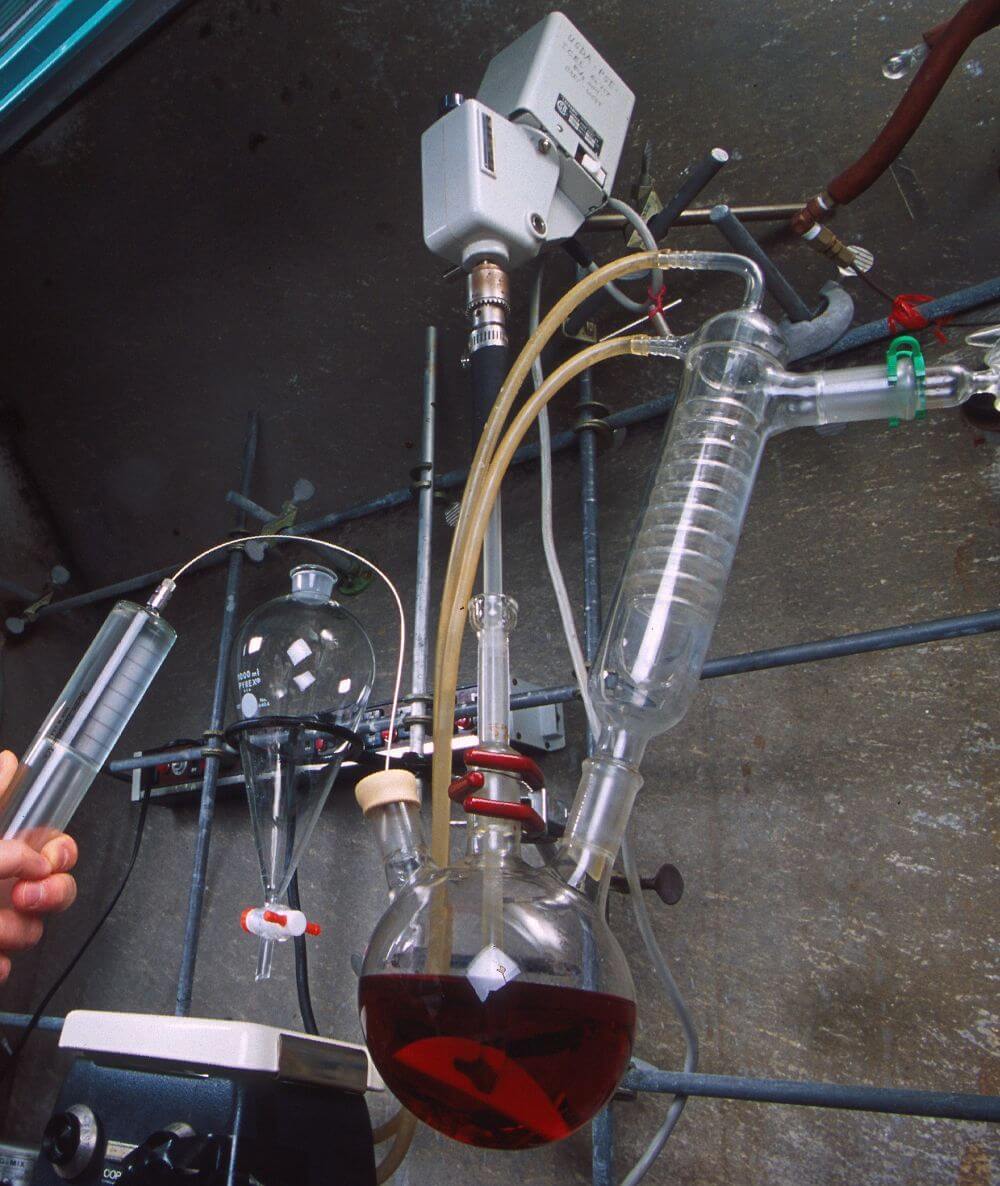
- Image credit: Scott Bauer, USDA Agricultural Research Service. Historical Medfly attractant research photograph · Original image · Public domain license. This laboratory photograph illustrates historical research, not the Puerto Rico response or an endorsement of ECOPHERO.