
On August 27, 2026, the Animal and Plant Health Inspection Service (APHIS) reported that it was adding Cape May County, New Jersey, to the box tree moth (Cydalima perspectalis) quarantine area, effective immediately. APHIS took the action in cooperation with the New Jersey Department of Agriculture (NJDA) through Federal Order DA-2026-30. The USDA APHIS program update is the official source for the federal action.
The update connects the quarantine to a confirmed box tree moth detection in Cape May County on May 20, 2026. It also says the federal action aligns with the intrastate quarantine that NJDA established on June 24, 2026. The announcement should therefore be read as a dated regulatory response to an earlier confirmed detection, not as evidence that the pest was first detected or became widespread on the publication date.
What the movement requirements mean
The quarantine places conditions on interstate movement of regulated boxwood articles from quarantined areas. APHIS says an establishment may move those articles only when it operates under a compliance agreement and each shipment includes a state-issued certificate showing that the establishment has met the requirements of Federal Order DA-2026-24 and its compliance agreement.
APHIS also prohibits interstate movement of other regulated boxwood articles, including plant parts, pieces, cuttings, clippings, debris, and any living or dead portion of the plant, except for decorative uses. Growers, nurseries, landscapers, carriers, and other handlers should follow the official federal and state requirements that apply to their activities. A monitoring observation does not replace a compliance agreement, certificate, or any other regulatory direction.
The EPPO datasheet describes C. perspectalis as a defoliator of box trees (Buxus species), native to humid subtropical East Asia and introduced into Europe in the 2000s. Its recorded U.S. distribution is restricted rather than nationwide; the fact-pack's EPPO evidence lists Delaware, Kentucky, Maryland, Massachusetts, Michigan, New York, Ohio, Pennsylvania, Virginia, and West Virginia. The Cape May County action is a separate 2026 regulatory event documented by APHIS. EPPO also provides a taxon overview and world-distribution record for DPHNPE.
Monitoring questions created by a new quarantine area
The addition of a county to a quarantine area sharpens several practical surveillance questions. A program may need to distinguish initial detection from repeated seasonal observations, define the area over which spread is being assessed, and preserve field records that can be interpreted alongside official surveillance. Those goals require more than placing traps: the objective, locations, timing, observation method, replication, and criteria for interpreting results all need to be stated in advance.
The APHIS update establishes the quarantine action, detection date, and movement requirements. It does not establish a pheromone formulation, lure loading, dispenser type, trap design, placement density, or box tree moth field-performance result. Those details cannot be inferred from the quarantine notice. Any candidate monitoring approach would need validation for the relevant geography, season, surveillance purpose, and regulatory setting.
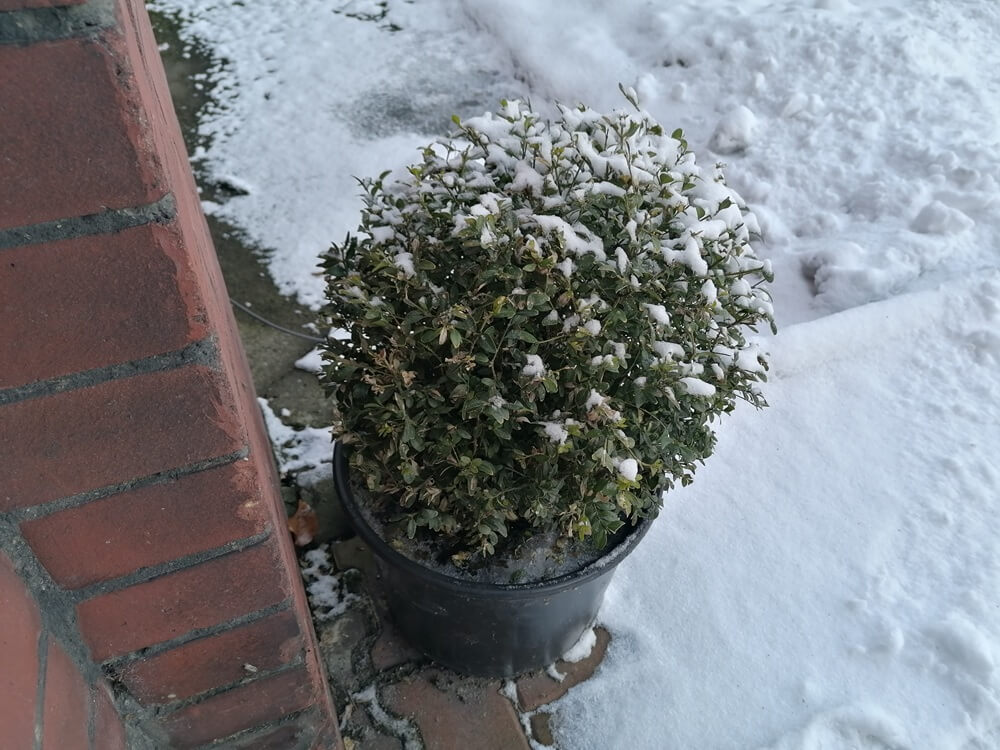
The cover photograph shows common box, a host plant of box tree moth, in Poland. It provides host-plant context only. It is not evidence of the Cape May County detection, does not depict the pest, and should not be used as a field-identification guide.
A capability-led path where the catalog has no target match
ECOPHERO's catalog does not list a product targeting Cydalima perspectalis or the genus Cydalima. The product analysis notes compounds associated with the topic elsewhere, but their catalog rows name other target pests. They therefore cannot be presented as matched box tree moth products. ECOPHERO makes no claim here for a catalog product, CAS-matched lure, registered use, or field-proven solution for this pest.
For teams assessing pheromone-based monitoring for box tree moth detection and spread surveillance in newly quarantined areas, ECOPHERO can support a semiochemical literature review. This can organize the available evidence, clarify which questions have been investigated, and separate candidate approaches from results demonstrated for the target species and intended setting. It does not itself establish field performance.
ECOPHERO can also support monitoring-program design and field-validation coordination. A defined program can specify its detection or spread-surveillance objective, sampling locations, timing, comparison method, replication, field-record structure, and decision criteria before candidate methods are evaluated. Coordination should remain aligned with official surveillance and quarantine requirements, and conclusions should be limited to what the resulting evidence supports.
This capability-led route preserves the boundary between a verified pest event and a monitoring-development project. The APHIS notice supports the New Jersey quarantine facts and movement conditions. It does not validate a commercial lure or authorize a monitoring claim. Field validation is a separate evidence-generating step.
Sources and image credit
- USDA APHIS — “APHIS Establishes a Box Tree Moth (Cydalima perspectalis) Quarantine in New Jersey”
- EPPO Global Database — Cydalima perspectalis (DPHNPE) overview
- EPPO Global Database — Cydalima perspectalis (DPHNPE) world distribution
- EPPO Global Database — Cydalima perspectalis (DPHNPE) datasheet
- Common box photograph and CC0 evidence — Abraham (Wikimedia Commons)

