
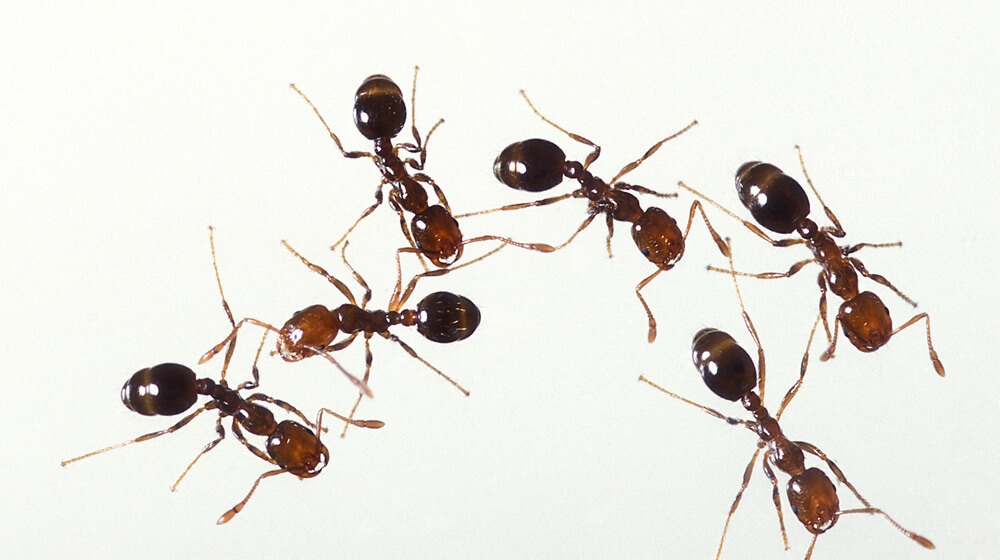
A red imported fire ant nest detected at commercial premises in Enfield, New South Wales, has put local surveillance in focus. The Australian Government's Outbreak response page reports that the Department of Agriculture Fisheries and Forestry detected the single nest on 23 September 2026. It also reports that the Australian and NSW governments are working together on further surveillance and monitoring in the area.
The dated detection is the starting point for understanding this report. The immediate story is a confirmed nest and a coordinated surveillance response. For organisations considering monitoring support, the practical question is how to define a pest-specific review and planning brief around that reported activity, while keeping technical proposals separate from confirmed response findings.
Why the species identity matters
The EPPO Global Database profile identifies Solenopsis invicta as red imported fire ant and places it in the family Formicidae. That profile provides a shared scientific reference for readers following the Australian report and for teams defining a literature-review question. Using the scientific name alongside the common name keeps the discussion anchored to the species named in the detection.
That distinction is particularly relevant when moving from an outbreak report to a technical enquiry. A species reference can establish what organism is being discussed; it does not, by itself, establish which monitoring approach should be adopted at a particular site. The Enfield report establishes the detection and the further surveillance activity. A technical proposal should be assessed against its own evidence and purpose.
Semiochemical questions begin with literature review
For a semiochemical enquiry concerning Solenopsis invicta, literature review is an appropriate scope to discuss with ECOPHERO. The service available for this topic is semiochemical literature review. A useful brief would ask what published evidence is relevant to the monitoring question, what conditions that evidence addresses, and which questions would remain for field validation.
These are questions for a review to examine, rather than findings about a particular chemical or lure. The Enfield detection report supplies the response context. It does not establish a semiochemical monitoring method for the site. Any proposal arising from a literature review would therefore need to explain the evidence behind it before a response team could consider its relevance.
ECOPHERO support for a defined monitoring brief
ECOPHERO can support semiochemical literature review and monitoring-program design and field-validation coordination for a pest-specific enquiry. For red imported fire ant, those capabilities provide a way to frame a technical discussion around surveillance planning. They should be scoped to the questions a team needs answered and the evidence available for those questions.
A prospective brief could identify the pest as Solenopsis invicta, describe the monitoring challenge, and specify what a literature review should resolve before planning moves further. A separate design discussion could set out which proposed elements require field validation. Such a brief would give the enquiry a clear purpose without presupposing the outcome of either the review or subsequent validation.
Keep response facts and proposed support distinct
The Australian Government report attributes the Enfield surveillance and monitoring activity to the Australian and NSW governments. ECOPHERO's capability offer is a separate invitation for technical enquiries. It should not be read as participation in that official response or as an endorsement of a monitoring method by the authorities involved.
For readers tracking the event, the essential facts remain the single nest reported at commercial premises, the 23 September 2026 detection date, and the further surveillance and monitoring described by the official response page. For teams exploring technical support, the next discussion can focus on a defined literature-review question and the scope of monitoring-program design and field-validation coordination.
Contact ECOPHERO with the pest name and your monitoring challenge to discuss a scoped enquiry covering these capabilities.
Sources and image credit
- Australian Government Outbreak — Red imported fire ant response: Enfield detection and surveillance report.
- EPPO Global Database — Solenopsis invicta: species name, common name and family.
