
A new paper on wild-mustard compounds has drawn attention to their potential use against several crop pests, including thrips. Published online on November 24, 2026 in Chemical and Biological Technologies in Agriculture, the study examines glucosinolates from Brassica arvensis and a nanoemulsion formulation. HortiDaily covered the work the following day. For greenhouse teams, the thrips experiment offers a research lead, with an important qualification about how the insects are named in the results.
The paper includes Thrips tabaci in its title. However, its greenhouse results table describes the insects as Thrips sp. That difference limits how precisely readers can attribute the findings to onion thrips. A formulation result reported for a genus-level identification should not automatically become a species-specific performance claim.
What was tested
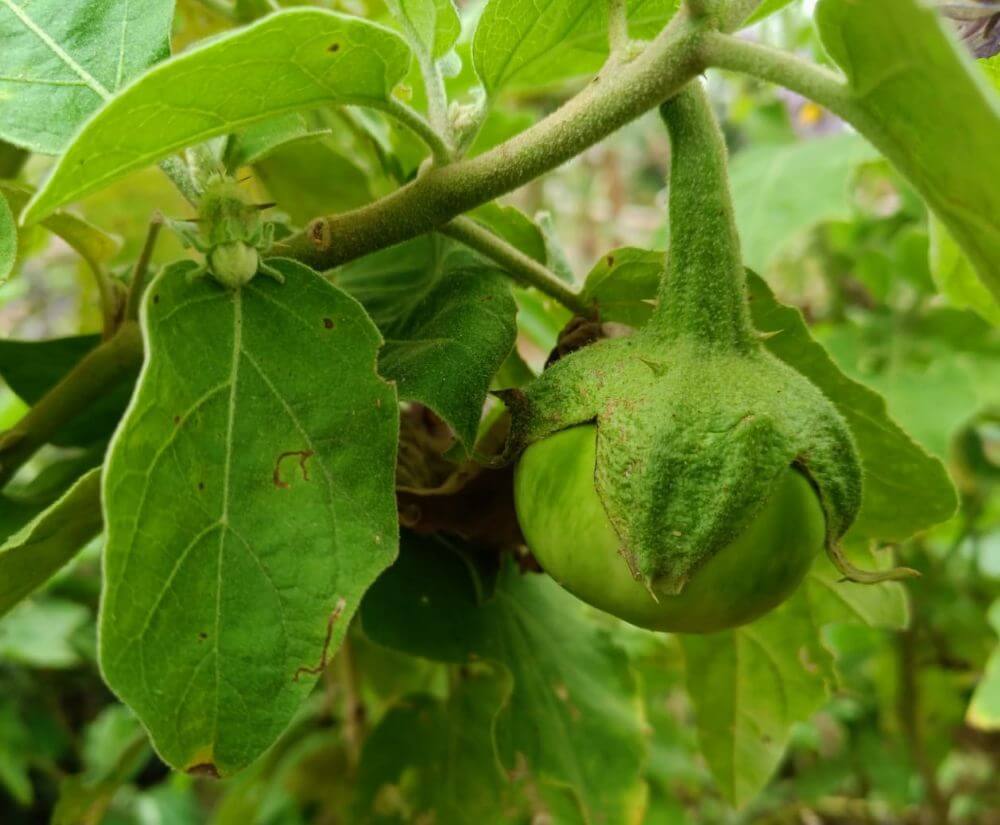
The greenhouse thrips experiment involved naturally infested pepper and eggplant leaves and included an insect count before treatment. These details distinguish it from a monitoring report based only on trap catches. The researchers were evaluating a plant-derived formulation in an experimental setting, not reporting a newly detected pest or describing a commercial monitoring service.
The study is broader than its thrips component. Its title also names a nematode, fungal and bacterial organisms, and weeds. Those different targets should be kept separate when discussing the findings. A result for one organism does not establish the same outcome for another, and the paper's range of test subjects is not a substitute for a clear account of the thrips assay itself.
For growers considering the relevance to their own crop, pepper and eggplant are the reported hosts in this part of the work. The material presented here does not establish an application rate or treatment threshold for another greenhouse. Nor does the publication demonstrate that a commercially available preparation would reproduce the experimental result under a grower's conditions.
Why the species label matters
EPPO identifies Thrips tabaci as onion thrips, under code THRITB. That provides a clear reference for the species named in the paper's title. It does not resolve the less specific wording in the greenhouse results table. The distinction is worth preserving when the study is shared between researchers, advisers and production teams.
A species name determines which biological and management evidence can reasonably be brought into the discussion. Treating all thrips records as equivalent can conceal differences between the pest in an experiment and the pest present in a crop. In this case, the safe reading is to describe a greenhouse thrips study whose title names onion thrips, while leaving the table's genus-level reporting visible.
The study was produced by Egypt-based researchers, but the supplied evidence does not specify the greenhouse assay location. Institutional affiliation alone should not be used to assign a field site. The dates are clearer: November 24 is the online publication date, and November 25 is the date of the HortiDaily follow-up.
Monitoring before transferring a research result
University of Kentucky Extension describes visual plant inspection and sticky cards as approaches to scouting onion thrips. That guidance supplies a monitoring connection, separate from the wild-mustard formulation experiment. It does not validate the experimental formulation or establish treatment thresholds for pepper and eggplant.
For a greenhouse reviewing this work, monitoring and formulation testing answer different questions. Scouting helps describe what is present in the crop. A treatment evaluation asks how an intervention performs against a defined target under stated conditions. Keeping the two records distinct makes it easier to identify what additional evidence would be needed before changing a management program.
ECOPHERO has no approved catalog listing for Thrips tabaci in the catalog reviewed for this article. A listing for western flower thrips would not fill that gap: Frankliniella occidentalis is a different species in a different genus. The relevant ECOPHERO inquiry scope is monitoring-program design and field-validation coordination, not a claim of an existing onion-thrips lure.
The practical next step is therefore a clearly defined monitoring question and a species-resolved evaluation plan. The paper provides a reason to investigate plant-derived formulations further; it does not remove the need to establish which thrips are being observed and what a local trial would need to demonstrate.
