Catalog product
(14S)-14-Methyl-1-octadecene
EP00136

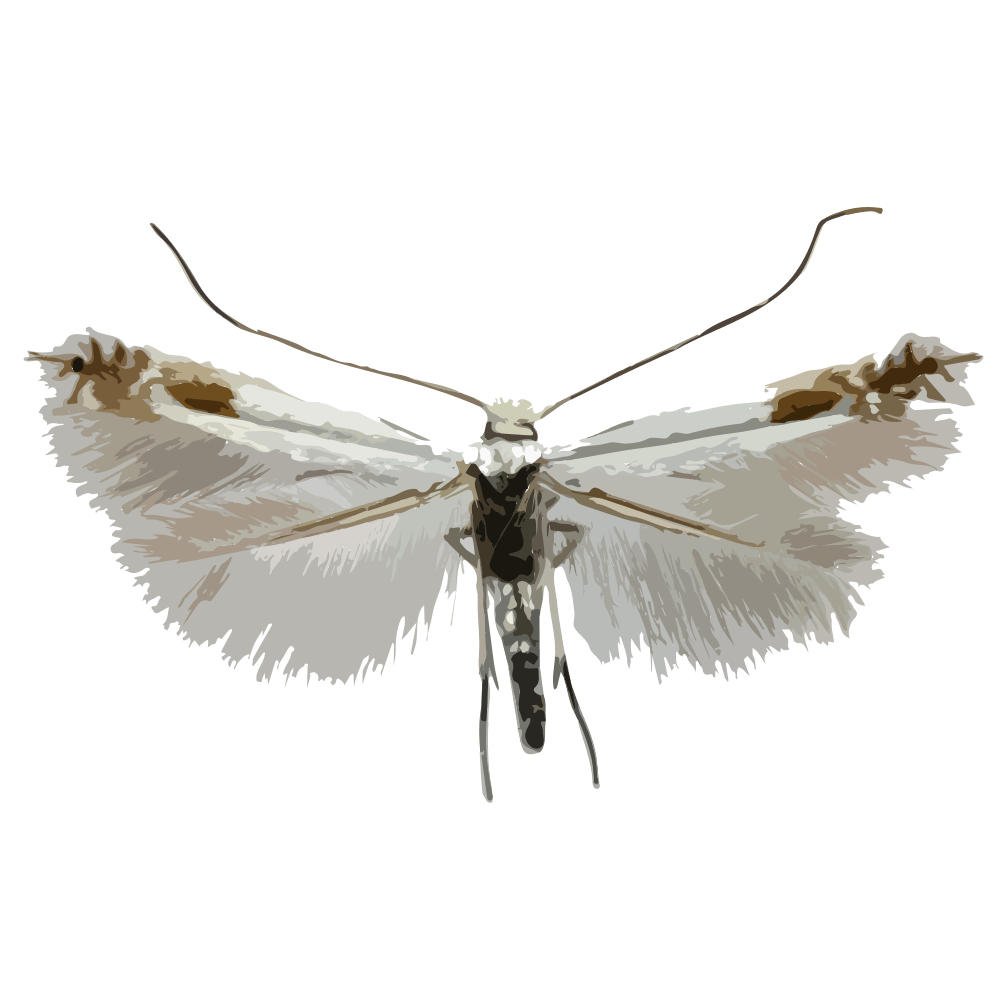
| Latin Name | Lyonetia clerkella |
| Common Name | Apple leaf miner |
| Biology | Adults are nocturnal with phototaxis, laying eggs on the undersides of leaves. Larvae penetrate beneath the leaf epidermis to feed on mesophyll, creating white, winding tunnels containing black frass, causing infested leaves to curl and fall off. This pest completes 4-5 generations annually, overwintering as pupae in fallen leaves or bark crevices. |
| Damage | This pest primarily damages Rosaceae fruit trees (peaches, apples, plums, cherries, pears). |
| Distribution Regions | East Asia |
| Monitoring | Pheromone lures mimic natural sex pheromones to attract male insects into specialized traps for population monitoring and suppression. As a core IPM component, monitoring enables early risk detection and targeted control. Mass trapping reduces mating opportunities to curb offspring populations. Protocols: ●Use only with matched traps. ●15-45 traps/hectare,replace/replenish every 4-6 weeks. ●Wear gloves or wash hands with detergent when switching lure types. ●Refer to trap-specific hanging instructions. |
| Recommended Traps | Delta Trap, Wing Trap |
Literature review
The cited publications support the exact compound-species relationship. Formulation, ratio, loading, release rate and field lifetime depend on a validated lure protocol and are not inferred here.
Share your contact information to discuss product selection or a custom synthesis project. If a catalog product does not match the agreed specification, our chemistry team can evaluate a custom route and scale-up plan.
