
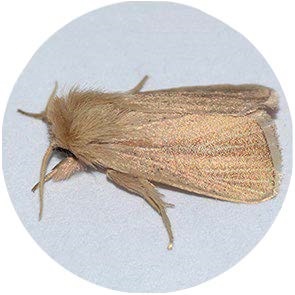
| 学名 | Sesamia inferens |
| 一般名 | Pink rice stem borer |
| 生態 | Adults are nocturnal, exhibit phototaxis, and prefer to lay eggs on tall, dense vegetation. Larvae bore into the stems of rice, corn, and other crops: newly hatched larvae cluster inside leaf sheaths to feed, forming "dead sheaths," while older larvae later bore into stems, causing "dead hearts" and "white panicles." This pest is relatively cold-tolerant, with 3-4 generations per year in the Yangtze River Basin and southern regions, and thrives in humid environments. |
| 被害 | This pest primarily damages Poaceae crops such as rice, corn, and sorghum, and can also harm sugarcane and reeds. |
| 分布地域 | China and South Asia |
| モニタリング | Pheromone lures mimic natural sex pheromones to attract male insects into specialized traps for population monitoring and suppression. As a core IPM component, monitoring enables early risk detection and targeted control. Mass trapping reduces mating opportunities to curb offspring populations. Protocols: ●Use only with matched traps. ●15-45 traps/hectare,replace/replenish every 4-6 weeks. ●Wear gloves or wash hands with detergent when switching lure types. ●Refer to trap-specific hanging instructions. |
| 推奨トラップ | Delta Trap, Wing Trap |
文献レビュー
引用文献は、化合物と種の正確な関係を裏付けています。製剤、比率、担持量、放出速度、圃場での持続期間は、検証済みの誘引剤プロトコルに依存するため、ここでは推定していません。
製品選定またはカスタム合成案件についてご相談ください。カタログ品が合意仕様に合わない場合、化学チームが専用ルートとスケールアップ計画を評価します。
