
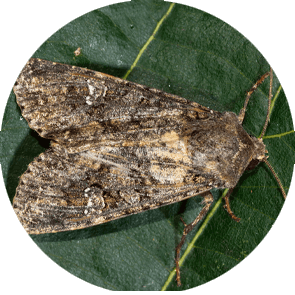
| 学名 | Mamestra brassicae |
| 一般名 | Cabbage moth |
| 生態 | Adults are nocturnal and strongly attracted to black light traps and sugar-vinegar solutions, laying eggs in clusters on the undersides of leaves. Larvae are polyphagous with 6 instars: young larvae cluster to feed, while older larvae disperse to cause damage, chewing holes or notches in leaves and even gnawing on leafy heads. This pest is prevalent in spring and autumn, posing a significant threat to Brassicaceae vegetables. |
| 被害 | This pest primarily damages cruciferous crops such as cabbages, Chinese cabbages, radishes, and rapeseed. |
| 分布地域 | Eurasian temperate regions |
| モニタリング | Pheromone lures mimic natural sex pheromones to attract male insects into specialized traps for population monitoring and suppression. As a core IPM component, monitoring enables early risk detection and targeted control. Mass trapping reduces mating opportunities to curb offspring populations. Protocols: ●Use only with matched traps. ●15-45 traps/hectare,replace/replenish every 4-6 weeks. ●Wear gloves or wash hands with detergent when switching lure types. ●Refer to trap-specific hanging instructions. |
| 推奨トラップ | Delta Trap, Wing Trap |
文献レビュー
引用文献は、化合物と種の正確な関係を裏付けています。製剤、比率、担持量、放出速度、圃場での持続期間は、検証済みの誘引剤プロトコルに依存するため、ここでは推定していません。
製品選定またはカスタム合成案件についてご相談ください。カタログ品が合意仕様に合わない場合、化学チームが専用ルートとスケールアップ計画を評価します。
