
Biosecurity Queensland confirmed Australia's first detection of Frankliniella intonsa in April 2026, after the insect was found in damaged raspberries at a farm in Elimbah. In a September 11 report, ABC Rural described damage to strawberry, raspberry and blackberry crops across the Moreton Bay and Sunshine Coast regions. The gap between the first confirmed detection and the later grower reports matters: the industry is confronting a pest during its berry season while its distribution and impact are still being assessed.
EPPO lists the pest as F. intonsa, code FRANIT. An exact identification is especially important when discussing monitoring tools: a lure investigated for another thrips species cannot be assumed to attract F. intonsa. Species-specific evidence would be needed before a candidate could be used to interpret field observations.
The damage appears at the flower and young-fruit stage
According to ABC Rural, the thrips feed and lay eggs in blossoms and on young fruit. Their feeding can scar strawberries, leaving the blistered, bronze appearance described by growers in the report. Fruit may remain edible but become more vulnerable to splitting and rain damage, and its appearance can limit marketability. At farms featured in the report, pickers were discarding damaged fruit during the season. Those accounts show the pressure facing affected growers; they do not establish the same level of loss at every Queensland berry farm.
Damage is not, by itself, a species identification. For farms comparing observations across fields or weeks, the useful record is more specific: the confirmed insect identification, crop, location, observation date and plant part inspected. It should also distinguish the April detection from subsequent reports of crop damage. Otherwise, a change in damaged fruit or trapped insects may be difficult to interpret, particularly where more than one thrips species is present. Consistent records would also help separate a local farm observation from a broader regional pattern.
Growers interviewed by ABC said insecticides had not brought the thrips under control in their fields. The report does not establish chemical resistance. It also describes growers working with breeders of beneficial insects. One breeder said predatory insects were released after thrips populations had already become high, making timing a critical concern. These experiences underline the need to understand when populations increase and where damage develops, without treating any one farm's experience as proof that a particular control method will work across the region.
What species-specific monitoring would need to answer
Biosecurity Queensland told ABC Rural it had undertaken surveillance, diagnostics and technical assessments. Government and industry would continue working to understand the pest's distribution, impacts and future management. That work leaves several practical questions for berry operations: where has F. intonsa been confirmed, when do populations rise during flowering, and how do observations differ between fields? A candidate monitoring tool would also need to be tested against a defined comparison, over a stated period and in the relevant crop conditions.
ECOPHERO can support a semiochemical literature review and a candidate pheromone or attractant synthesis inquiry for F. intonsa. A candidate would require analytical verification, followed by lure formulation and dispenser optimization support if the evidence warranted further work. Monitoring-program design and field-validation coordination could then help define comparisons with appropriate controls in berry crops. This is research and development support, not an existing species-specific lure recommendation or a claim of proven field performance.
The first detection at Elimbah and the later crop reports offer a starting point for such work. Field observations need to be tied to species identification and to the crop, district and date on which they were made. Monitoring across a flowering period could then be designed around a clear question, such as whether a candidate method detects change consistently enough to inform a decision. The reported damage makes that question worth investigating; it does not demonstrate that a commercial lure for F. intonsa is already available.
For growers, researchers and monitoring teams, the immediate opportunity is to build a species-specific picture of the pest. Confirmed detections, field observations and trial results should remain distinct, even when they come from the same district. A proposed attractant would have to show what it detects, under which conditions and with what consistency before its results could guide routine monitoring. Until then, the Queensland experience is a reason for careful investigation, not a shortcut from a related-species compound to an established solution.
Sources and image credit
- ABC Rural - "New pest insect attacks berry crops after breaching Australian biosecurity" (11 September 2026)
- EPPO Global Database - Frankliniella intonsa (FRANIT) overview
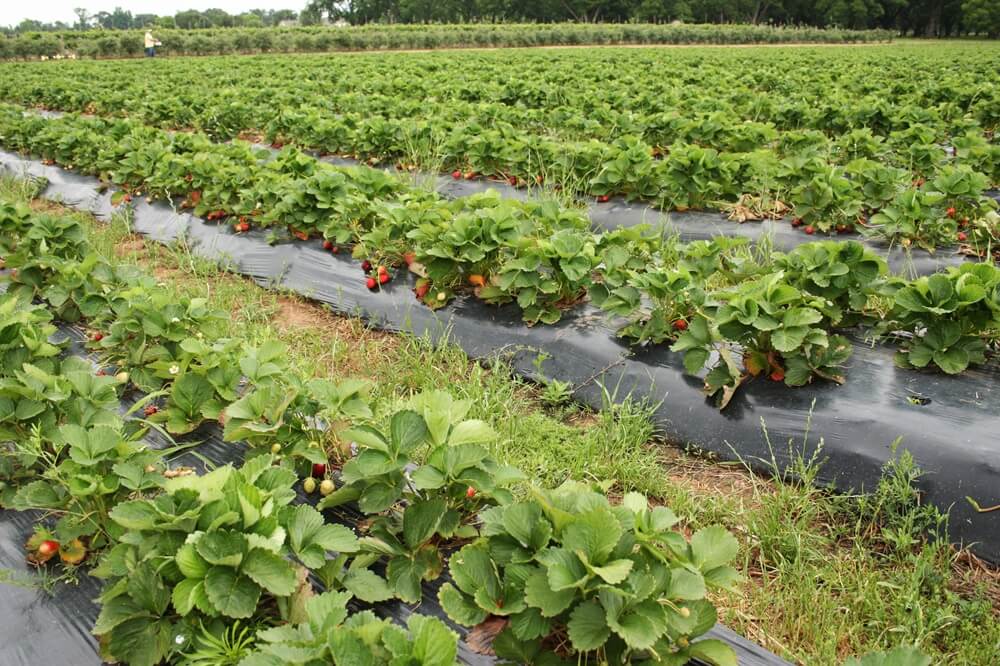
- Illustrative strawberry-field photograph and CC0 license - Alabama Extension / Bruce Dupree. The photograph is not of the Queensland outbreak or the pest.

