
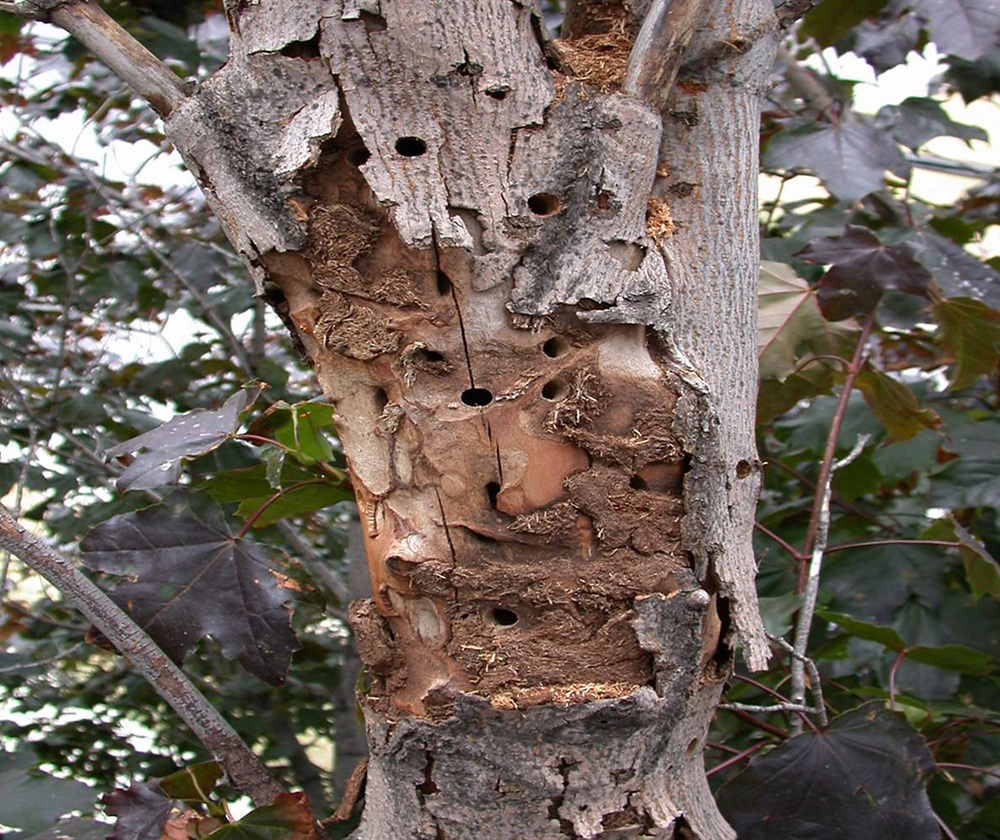
Asian longhorned beetle quarantine coverage has changed in southeast Tate Township, Clermont County, Ohio. In its October 1, 2026 notice, DA-2026-42, the USDA Animal and Plant Health Inspection Service (APHIS) announced the removal of 6.2 square miles from the quarantined area after the ALB Eradication Program completed final surveys of host trees.
The APHIS notice identifies a specific portion of the township. The rest of Tate Township remains under quarantine. That distinction is central to understanding the announcement: the release applies to the surveyed southeast area, while the township still contains an area subject to quarantine.
For readers following Asian longhorned beetle, Anoplophora glabripennis, the news is a geographically bounded change. Describing it as a release of the entire township would lose the most important qualification in the official notice. The location, the area removed, and the remaining quarantine belong together whenever the update is shared.
Why the survey decision matters
The APHIS Asian longhorned beetle program overview explains that surveys help determine the scope of an infestation and when an area can be released from quarantine. The Tate Township announcement gives a concrete example of that decision process: completion of final host-tree surveys preceded the removal of the specified area.
The milestone therefore concerns both geography and evidence. The 6.2-square-mile figure describes the area released; the completion of surveys describes the basis APHIS identified for releasing it. Neither detail should stand alone when explaining what changed. Together, they connect a local quarantine update with the broader role of survey work in the agency's program.
For forestry professionals tracking this announcement, the useful question is which part of Tate Township the notice covers. A township name alone is too broad to communicate this change accurately. Reading the official notice alongside the program overview keeps the local event connected to its survey context and preserves the distinction between the released area and the remainder.
The ECOPHERO catalog connection
ECOPHERO's catalog lists 4-(heptyloxy)butanal, CAS 65885-35-0, with Anoplophora glabripennis as its target pest and forestry as its scenario. This provides an exact species connection for readers considering pheromone-related monitoring questions involving Asian longhorned beetle. The chemical identity and the scientific pest name give those discussions a precise starting point.
A catalog listing and a quarantine-release notice answer different questions. The catalog identifies a product associated with the pest; the APHIS announcement identifies an area released after final host-tree surveys. APHIS attributes its decision to that survey milestone. The announcement provides no basis for attributing the release to ECOPHERO product use.
Anyone considering this catalog entry for a monitoring project should distinguish the identity of the chemical from the performance of a finished lure or field protocol. Product selection, deployment parameters, and assessment of results require evidence appropriate to the intended use. The Tate Township update supplies a survey-based quarantine milestone rather than product application guidance.
Keep monitoring discussions tied to the decision being made
The APHIS overview places surveys within the process of determining infestation scope and deciding when quarantine release is appropriate. In discussing monitoring, that decision context matters: an observation, a product inquiry, and an official quarantine decision should each be described according to what they establish.
For this event, the official findings support a clear account of progress in southeast Tate Township while retaining the qualification that the rest remains quarantined. A pheromone product inquiry can begin with the exact species and CAS identity, but the public announcement remains the authority for describing the local quarantine change.
Contact ECOPHERO with the pest name, CAS 65885-35-0, or your forestry monitoring question to discuss the catalog entry for 4-(heptyloxy)butanal.
Sources and image credit
- Exact official notice
- Asian Longhorned Beetle | Animal and Plant Health Inspection Service
- Image: Historical ALB damage to a red maple in Carteret, New Jersey; illustrative damage context, not Tate Township.; USDA ARS source page. Credit: Michael Smith, USDA Agricultural Research Service. License: Public domain.

