
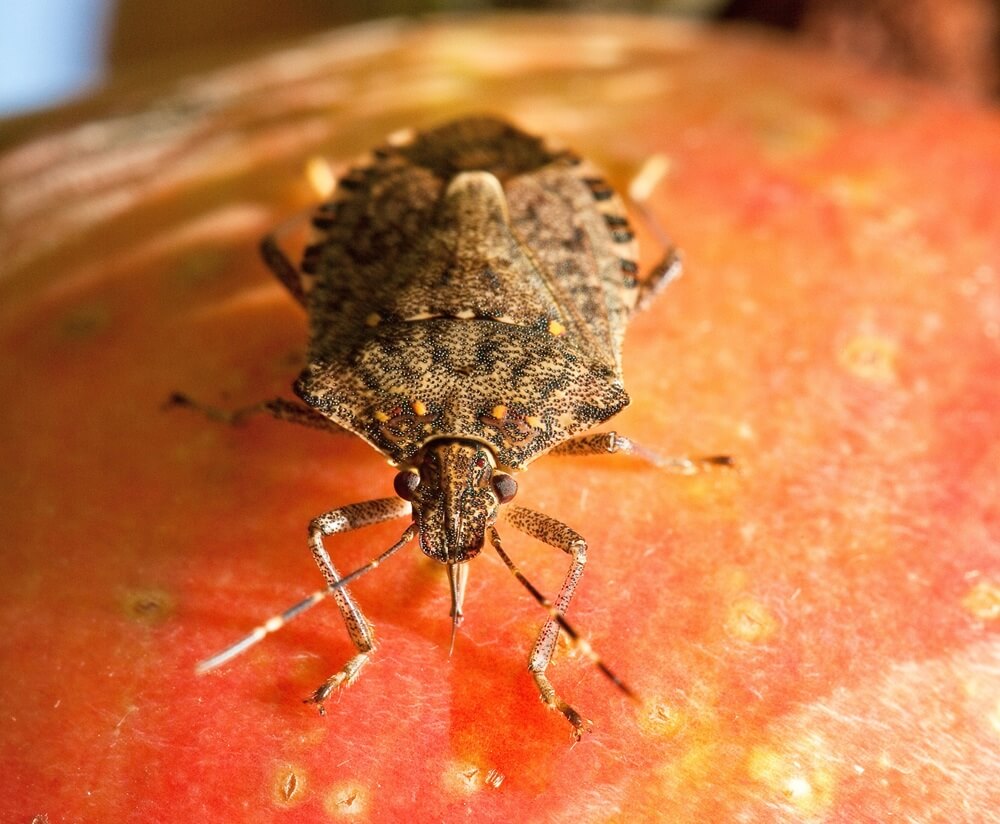
July is a practical monitoring window for stink-bug programs in the Northern Hemisphere. Brown marmorated stink bug (Halyomorpha halys) is an invasive plant-health pest associated with fruit, vegetable, field, and ornamental hosts, and seasonal movement into crops can make early field signals more valuable than reactive scouting after damage appears.
This seasonal brief focuses on brown marmorated stink bug and southern green stink bug (Nezara viridula) programs where aggregation pheromone traps are used for detection, population tracking, and mass-trapping support. The goal is not an eradication claim. The goal is to help growers and IPM teams know when pressure is building, where activity is concentrated, and whether local control decisions should intensify.
Why It Matters
EPPO and USDA APHIS identify brown marmorated stink bug as a plant-health concern with broad host relevance. During the June-July build-up window, monitoring tools need to be in place before pressure peaks. For fruit blocks, vegetable fields, soybean, corn, orchard edges, and mixed-host landscapes, early detection can help teams compare pressure across locations instead of relying only on visible feeding injury.
Aggregation lures are especially useful because stink bugs are mobile and field pressure is often uneven. Trap placement, lure replacement, trap density, and action thresholds still need local validation, but trap data can provide a consistent signal for monitoring and area-wide decision support.
How the Pheromone Strategy Works
Stink-bug aggregation pheromones draw adults and nymphs toward trap systems. In monitoring programs, traps are usually deployed as sentinel stations at field edges, orchard borders, entry points, or previous hot spots. In mass-trapping programs, the same attraction principle is used at higher deployment density where local protocols support that approach.
These tools should be positioned as part of IPM: scouting, crop-stage awareness, sanitation, biological control compatibility, and targeted interventions still matter. Pheromone traps improve the information layer and, in validated programs, can also contribute to pressure reduction.
The ECOPHERO Solution
ECOPHERO supplies aggregation pheromone actives for stink-bug monitoring and mass-trapping programs:
- Methyl (2E,4Z)-decadienoate - CAS 4493-42-9
- (Z)-alpha-Bisabolene epoxide - CAS 111536-37-9
- BMSB aggregation pheromone - CAS 1030630-94-4
Mode: Monitoring / mass trapping
Application: Aggregation pheromone traps for stink-bug early warning, population tracking, and validated mass-trapping programs
Catalog matching should be read precisely. CAS 4493-42-9 targets Euschistus spp. and Plautia spp.; CAS 111536-37-9 targets Nezara viridula; and CAS 1030630-94-4 targets Halyomorpha halys and Murgantia histrionica. For mixed stink-bug programs, ECOPHERO can discuss the target pest, CAS number, blend requirement, lure format, and specification before production.
Deployment Notes for July Programs
For seasonal monitoring, traps should be installed before pressure becomes obvious and checked on a defined schedule. Field teams should document trap location, lure age, crop stage, surrounding host vegetation, and catch trend rather than using one catch number in isolation.
Blend ratios, dispenser format, trap density, placement, and replacement interval are not universal parameters. They should follow local extension guidance, trial data, or buyer protocols for the target crop and region.
ECOPHERO Capability
ECOPHERO manufactures pheromone active ingredients from gram to ton scale and supports custom synthesis for pest-specific monitoring and mass-trapping programs. For stink-bug projects, contact ECOPHERO with the pest name, CAS number, expected purity, quantity, and formulation requirement for a quote, lead time, and specification.
Sources
- EPPO Global Database - Halyomorpha halys
- USDA National Invasive Species Information Center - Brown Marmorated Stink Bug
- Image: Brown marmorated stink bug feeding on apple, USDA Agricultural Research Service / Stephen Ausmus, public domain; attribution not required.

