
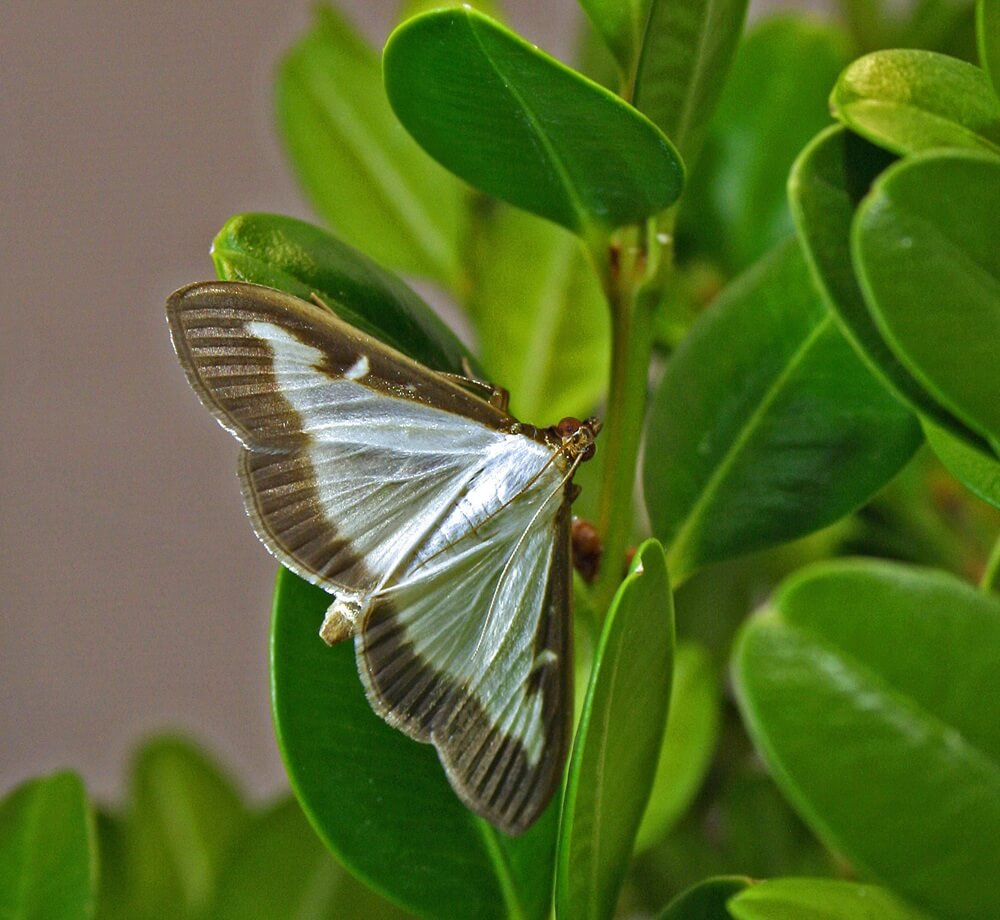
Atlantic and Cumberland Counties are included in an expanded New Jersey quarantine for box tree moth, according to an official pest report posted by the North American Plant Protection Organization (NAPPO) on October 15, 2026. The report identifies the pest as Cydalima perspectalis and describes an expansion by the US Department of Agriculture’s Animal and Plant Health Inspection Service (APHIS).
For organizations working with boxwood, the announcement brings a specific geographic change into focus: both named counties are within the quarantine area described in this report. The report also identifies the purpose of APHIS regulation of interstate boxwood plant movement as preventing the spread of box tree moth. That connection between a named pest, a defined area and movement of its host plants is the central operational context for this update.
Keep the confirmation date separate from the report date
The reported confirmation in Cumberland County occurred on August 20, 2026. October 15 is the publication date of the NAPPO report. These dates describe different stages of the event and should remain separate when organizations summarize the announcement or incorporate it into surveillance planning.
The report does not supply an exact federal effective-action calendar date. The October posting therefore should not be presented as the date of first detection or as a separately verified federal action date. Likewise, the inclusion of Atlantic County in the reported quarantine area does not establish a county-specific confirmation date for Atlantic County. The explicit confirmation date available here concerns Cumberland County.
Maintaining those distinctions is useful when comparing a pest report with an organization’s own dated observations. A clear chronology allows the geographic update and the earlier confirmation to be understood together, without treating publication timing as evidence of when the pest first arrived. This article describes the October 15 report and its stated county coverage.
Why boxwood is the focus
The EPPO Global Database identifies box tree moth as a defoliator of box trees, Buxus species. This host association provides biological context for the movement controls described by NAPPO: APHIS regulates interstate movement of boxwood plants from quarantined areas to prevent spread of the moth.
The two sources serve complementary purposes. NAPPO supplies the dated New Jersey event and the named counties. EPPO supplies the pest’s association with box trees. The EPPO profile should be read as species background; the county-level quarantine information comes from the official pest report. Neither the host description nor the geographic expansion provides a measure of local damage, a count of affected establishments or a quantified rate of spread.
For surveillance planning, a useful starting question is how an organization will connect its observations to the relevant host, location and date. Teams can use the county names and confirmation date as reference points when defining the scope of a monitoring discussion. Any decision about a particular interstate shipment should be checked against the applicable official requirements; a surveillance plan itself does not establish permission to move plants.
ECOPHERO support for a defined surveillance question
ECOPHERO can support semiochemical literature review and monitoring-program design and field-validation coordination for a box tree moth surveillance inquiry. A practical discussion can begin with the question the program is intended to answer, the boxwood setting under consideration and the geographic scope of interest. Those details help define what literature should be reviewed and what a proposed field-validation effort would need to examine.
The literature-review stage can organize a discussion around the evidence relevant to the proposed monitoring question. Monitoring-program design and field-validation coordination can then address how that question would be evaluated in the intended setting. Performance conclusions would require evidence from the relevant validation work; the quarantine announcement does not establish monitoring-tool performance.
Organizations considering surveillance in connection with this report can bring a clearly stated objective to ECOPHERO for these two support activities. The immediate task is to define an evidence-based inquiry around box tree moth and boxwood in the reported quarantine context, while keeping regulatory movement decisions with the responsible authorities.
