
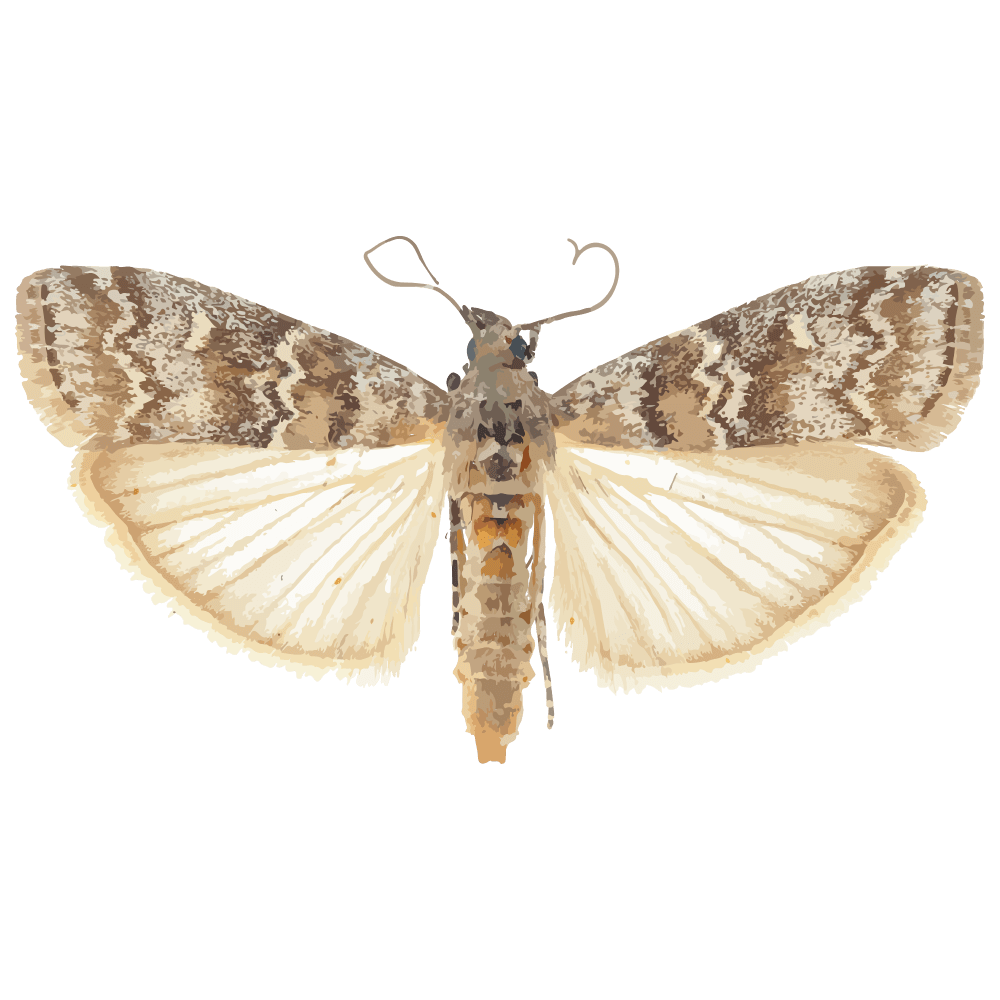
| Lateinischer Name | Dioryctria abietella |
| Trivialname | Spruce coneworm |
| Biologie | Adults exhibit similar nocturnal habits to Dendrolimus species, displaying phototaxis and laying eggs on young shoots and cones of spruce trees. Larvae bore into new shoots and cones, causing shoot wilting and impaired seed development in damaged cones. This species completes 1–2 generations annually, overwintering as larvae within infested shoots or cones. |
| Schaden | This pest primarily damages Spruce. |
| Verbreitungsgebiete | Eurasian cold temperate zone |
| Monitoring | Pheromone lures mimic natural sex pheromones to attract male insects into specialized traps for population monitoring and suppression. As a core IPM component, monitoring enables early risk detection and targeted control. Mass trapping reduces mating opportunities to curb offspring populations. Protocols: ●Use only with matched traps. ●15-45 traps/hectare,replace/replenish every 4-6 weeks. ●Wear gloves or wash hands with detergent when switching lure types. ●Refer to trap-specific hanging instructions. |
| Empfohlene Fallen | Delta Trap, Wing Trap |
Teilen Sie Ihre Kontaktinformationen, um präzise passende Pheromonlösungen zu erhalten. Sollte unser bestehendes Portfolio keine optimale Lösung bieten, initiiert unser Synthesechemie-Team eine kundenspezifische Entwicklung – vom Molekülstrukturdesign bis zur skalierten Produktion.
