
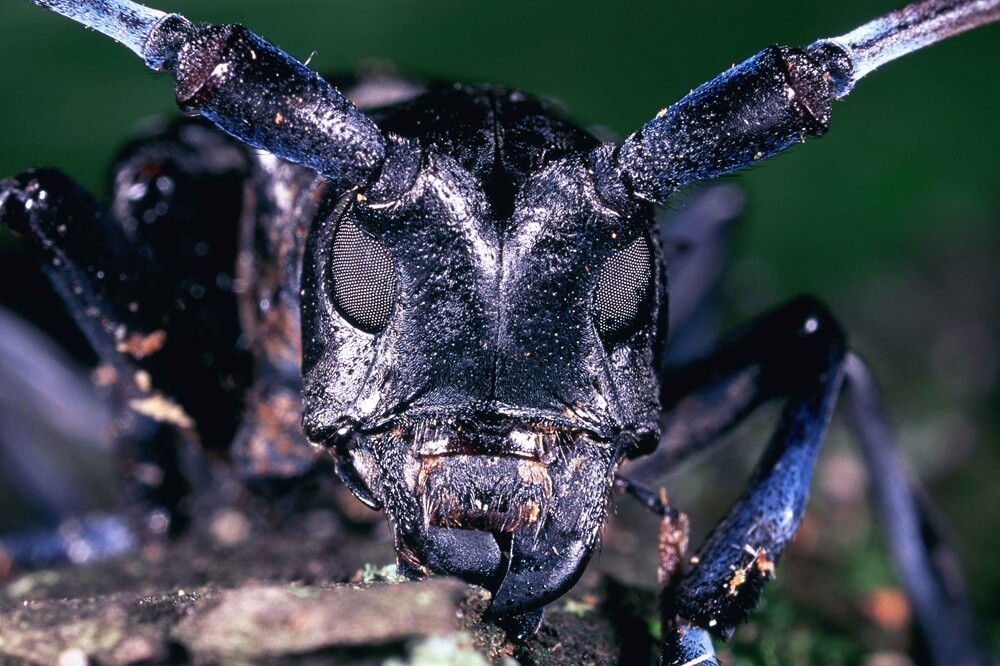
USDA’s Animal and Plant Health Inspection Service (APHIS) announced additions to the Asian longhorned beetle quarantine in Charleston County, South Carolina, on September 1, 2026. The update, issued in cooperation with Clemson University’s Department of Plant Industry, added 16.5 square miles in Mount Pleasant and 25.2 square miles in Hollywood. APHIS said the expansion was effective immediately. The two figures describe the areas being added, rather than the full size of the quarantine.
The announcement connects a local change in quarantine coverage with a longer history of Asian longhorned beetle detections and program activity. For ECOPHERO readers, it also identifies a pest with a direct catalog connection: Anoplophora glabripennis is the scientific target listed for 4-(heptyloxy)butanal, CAS 65885-35-0. The official event report and the catalog entry provide the basis for the account below.
Detections behind the September announcement
APHIS attributed the expansion to infested trees confirmed in Mount Pleasant on August 24, 2025, and additional detections in Hollywood. The Mount Pleasant finding therefore preceded the September 2026 announcement by more than a year. The update gives no separate detection date for Hollywood. Those dates matter when placing the expansion on a timeline: September 1, 2026 is the announcement date, while August 24, 2025 is the specified Mount Pleasant confirmation date.
The state’s detection history extends further back. APHIS reported that Asian longhorned beetle was detected in South Carolina in 2020. The Mount Pleasant and Hollywood additions sit within that longer history. They concern an expansion of quarantined areas in Charleston County, with the September announcement identifying the locations and additional area covered by the action.
Hardwood hosts and the wider program
Asian longhorned beetle is a wood-boring pest. According to the APHIS update, it attacks 12 genera of hardwood trees, including maples. The report thus places the pest’s host range across multiple hardwood genera. It also dates the first United States detection to New York in August 1996, providing national context for the later South Carolina detection and this latest reported quarantine expansion.
The September update records continuing program activities in several states: Worcester County in Massachusetts; Nassau and Suffolk Counties in New York; Clermont County in Ohio; and Charleston and Dorchester Counties in South Carolina. These locations describe the program activity reported at the time of the announcement. The particular area additions discussed here are in Mount Pleasant and Hollywood, both in Charleston County. Dorchester County appears in the broader account of continuing program work.
Reading the boundary information
APHIS identifies an attached Federal Order as the document containing the updated quarantine boundaries. The update also says that the order references the Asian longhorned beetle regulations in 7 CFR 301.51-1 through 301.51-9. Readers seeking the boundary description can follow the official APHIS announcement in the Sources section to the referenced order.
The reported square-mile additions communicate the scale of the change in each location. Determining the geographic extent requires the boundary document itself; the two area figures alone do not identify individual properties. This article reports the announcement and its stated basis. Its account of the order is limited to the information provided in the APHIS update: the order contains revised boundaries and references the specified regulations.
ECOPHERO’s catalog connection
ECOPHERO’s catalog lists 4-(heptyloxy)butanal, CAS 65885-35-0, with Anoplophora glabripennis in the target-pest field. The species matches the Asian longhorned beetle named by APHIS. This gives readers a specific product identity associated with the pest in the catalog, alongside the dated account of the quarantine expansion.
The supported product connection is the catalog listing. It does not establish selection or deployment of the compound by APHIS or Clemson University in South Carolina. Evidence for a registered use, field performance, application rate or complete lure formulation is outside the supplied record. Product references here remain limited to the chemical name, CAS number and listed target species. The APHIS announcement remains the primary source for the reported detections, quarantine additions and program context.
Sources
- USDA APHIS Program Update DA-2026-35 (Asian longhorned beetle quarantine expansion, South Carolina)
- EPPO Global Database — Anoplophora glabripennis (ANOLGL) Overview
- EPPO Global Database — Anoplophora glabripennis (ANOLGL) Datasheet
- Cover image and Public domain evidence — Appleby J E, U.S. Fish and Wildlife Service

