
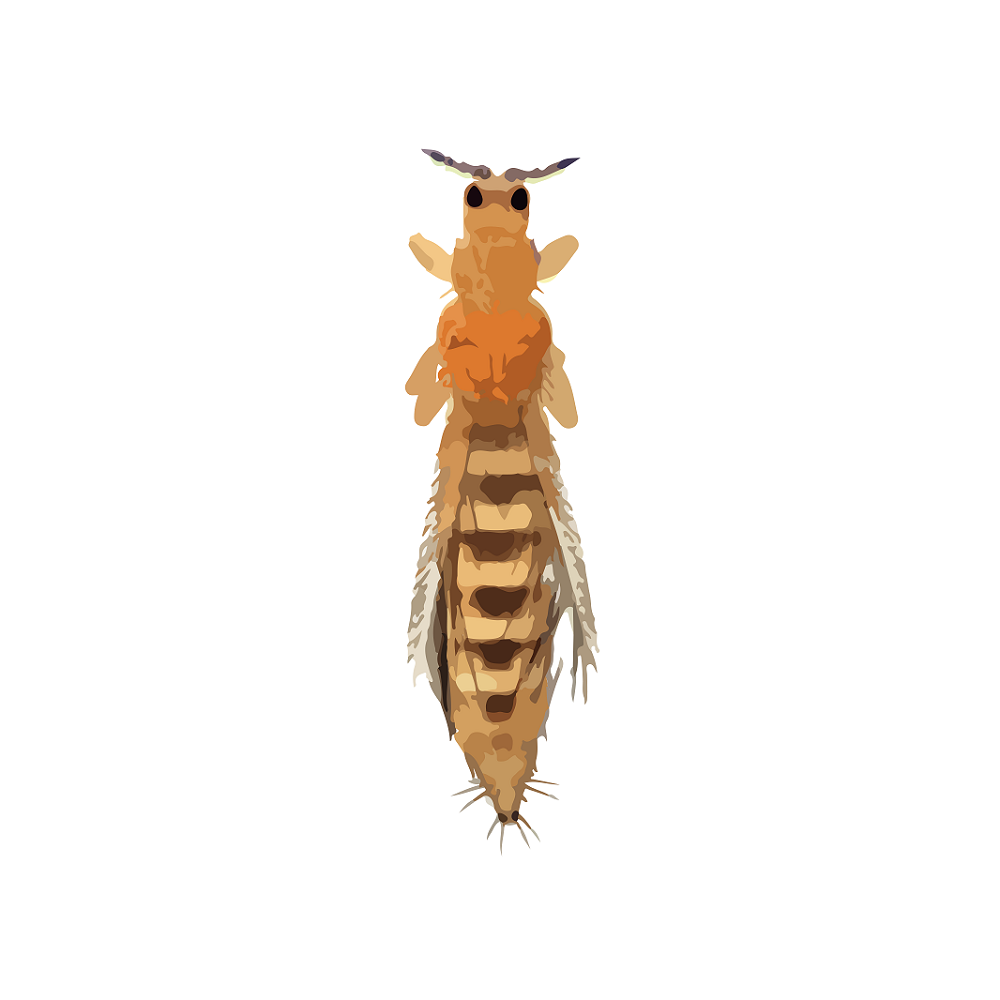
| Nom latin | Thysanoptera spp |
| Nom commun | Thrips |
| Biologie | Adults are active, good fliers, and capable of wind-assisted dispersal, mainly active in the morning, evening, or on cloudy days. Both nymphs and adults use rasping-sucking mouthparts to feed on plant leaf, flower, and fruit sap, causing chlorotic spots (progressing to curling and shriveling in severe cases), withered flowers, and scarred fruit surfaces—compromising quality. This pest reproduces rapidly and thrives in warm, dry conditions. |
| Dégâts | This pest primarily damages various crops, such as vegetables (cucumber, eggplant), flowers (rose, chrysanthemum), and fruit trees (citrus, grape). |
| Régions de distribution | Global Protected Agriculture Zones |
| Surveillance | Pheromone lures mimic natural sex pheromones to attract male insects into specialized traps for population monitoring and suppression. As a core IPM component, monitoring enables early risk detection and targeted control. Mass trapping reduces mating opportunities to curb offspring populations. Protocols: ●Use only with matched traps. ●15-45 traps/hectare,replace/replenish every 4-6 weeks. ●Wear gloves or wash hands with detergent when switching lure types. ●Refer to trap-specific hanging instructions. |
| Pièges recommandés | Blue sticky trap |
Communiquez vos coordonnées pour discuter du choix d'un produit ou d'un projet de synthèse sur mesure. Si aucun produit catalogue ne correspond à la spécification convenue, notre équipe peut évaluer une voie et un plan de changement d'échelle dédiés.
