
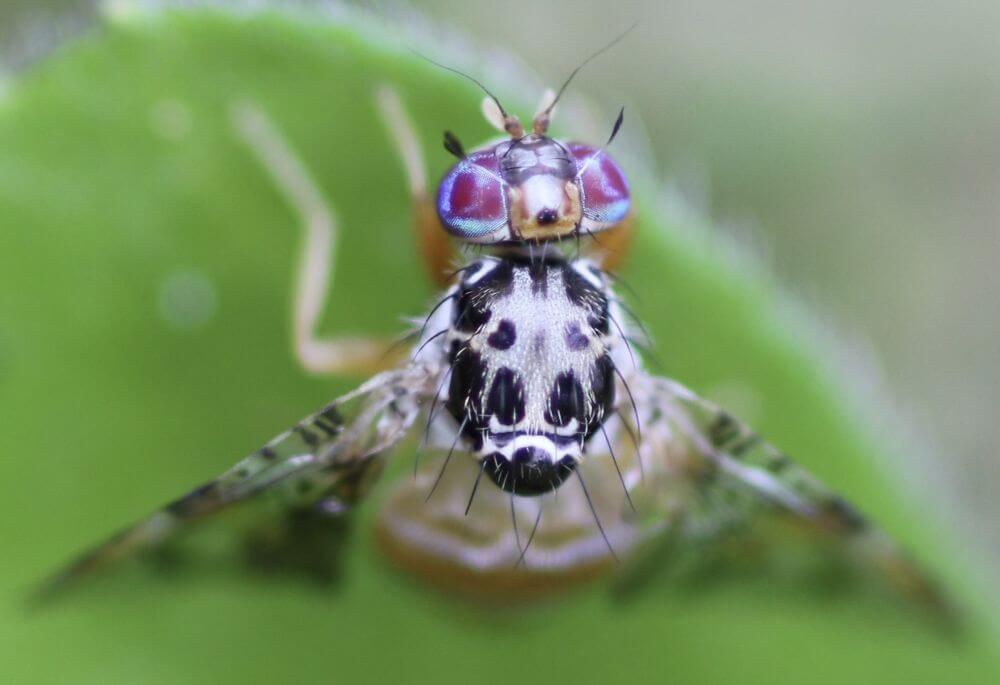
The U.S. Department of Agriculture’s Animal and Plant Health Inspection Service (APHIS) established a federal quarantine for Mediterranean fruit fly (Ceratitis capitata) in the District of Saint Croix, United States Virgin Islands. Federal order DA-2026-50 is dated November 16, 2026, and APHIS posted the notice on November 18. The federal action parallels a quarantine established by the Virgin Islands Department of Agriculture on September 28. The agencies acted after confirming four Mediterranean fruit flies, also known as Medflies, in Christiansted. APHIS reported that the federal quarantine covers 83.79 square miles. USDA APHIS federal notice
What the detections and the quarantine boundary tell us
Christiansted is the location APHIS gives for the four confirmed flies. The 83.79-square-mile figure describes the area covered by the federal quarantine. For growers and others following the response, those details answer different questions. The detection location tells readers where the flies were confirmed. The quarantine area describes the geographic scope of the regulatory action. When referring to the size of the area, use the figure as a description of the quarantine boundary. For questions about whether a specific location falls within that boundary, consult the federal notice and the agency’s quarantine information. USDA APHIS federal notice
The dates matter when sharing the update with colleagues or comparing it with other alerts. September 28 is the date of the territorial action. November 16 is the date of the federal order, and November 18 is the posting date for the APHIS notice. Citing DA-2026-50 alongside its order date makes it easier for a grower, crop adviser, or monitoring team to identify the relevant federal action. Use Christiansted when describing the confirmations and Saint Croix when referring to the district covered by the notice. USDA APHIS federal notice
Where the Saint Croix report fits in fruit fly surveillance
APHIS describes a wider exotic fruit fly detection network of more than 160,000 traps across multiple jurisdictions. That number gives a sense of the scale of the broader program. For a briefing on Saint Croix, the federal order supplies the local figures and geography, while the exotic fruit flies overview provides context on how APHIS organizes detection across jurisdictions. When using both sources in a program update, attribute each figure to the record it came from and keep the geographic scope with the number. USDA APHIS exotic fruit flies overview
Teams discussing monitoring after a detection can start by defining what information they need. A team following the regulatory response may need to confirm which locations the order covers. A team reviewing its monitoring records may need to check whether the species name is recorded consistently across reports and product inquiries. Using the scientific name Ceratitis capitata alongside Medfly makes that comparison easier, especially when several fruit fly species appear in the same set of records. Keep the agency notice attached to the event record so colleagues can check the dates, location, and reported findings directly.
ECOPHERO catalog listing for Mediterranean fruit fly
ECOPHERO lists tert-butyl 4-chloro-2-methylcyclohexane-1-carboxylate (TML, CAS 12002-53-8) for Ceratitis capitata. The scientific name and CAS number identify the target species and compound for a catalog inquiry. For an inquiry about a lure or monitoring program, describe the intended use and the conditions under which it would be evaluated. Those details give the team a basis for discussing candidate materials and identifying what would need local validation before field use. If you are reviewing options for Medfly monitoring, contact ECOPHERO with the species name, the CAS number if known, and the monitoring question you need to answer.
For a procurement team, the catalog listing provides an identifier to carry from the initial inquiry into a specification. For a monitoring team, the starting point is the question the material would help evaluate. Include the intended monitoring setting and any evaluation criteria already in use. With that information, the two teams can discuss the same compound while documenting what they would need to assess in their own program.
