
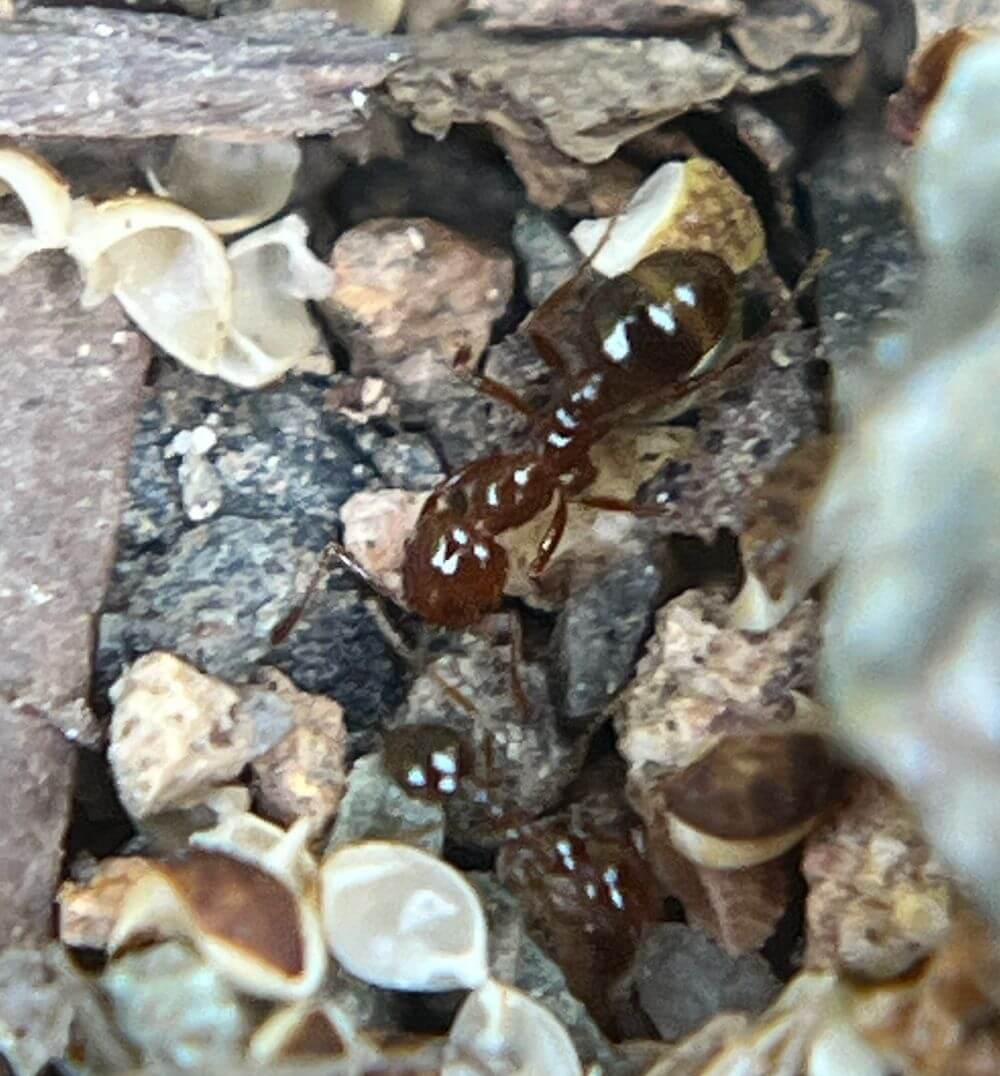
Australian authorities reported a red imported fire ant detection on 21 November 2026 at a semi-industrial site in Auburn, New South Wales. The NSW Department of Primary Industries and Regional Development treated nests at the site. The Australian Government’s Outbreak page also described surveillance, precautionary treatment and community engagement in the area. The origin of the Auburn ants was still under investigation at the time of the update.
The report gives a date and setting for the detection and describes the response underway when the page was updated. Those details are useful starting points for teams following the incident. The detection belongs in the record as a dated observation tied to the Auburn site. Nest treatment belongs in the response record, alongside the surveillance and engagement described by the authorities. The question of origin remains open.
Why species identification matters
The EPPO Global Database lists the red imported fire ant as Solenopsis invicta, a member of the family Formicidae. Using the scientific name alongside the common name gives teams a shared reference when they compare a government notice with a species profile or search the technical literature. For the Auburn incident, the Outbreak page is the source for the date, location and response. The EPPO entry provides the species reference for that discussion.
The same distinction matters when reviewing research. A bibliography for a species-specific monitoring project can record which ant each study examined, what the researchers observed and the conditions under which they collected their data. A team can then distinguish studies on S. invicta from work on other ants and decide which questions merit closer review.
What a semiochemical review can examine
For teams considering semiochemicals in a future monitoring project, the literature review can start with a narrow question. What, if anything, has been documented for S. invicta that addresses the observation the team needs to make? Useful details to record include the species examined, the setting of the study and the outcome the researchers measured. Those details help a team decide which findings warrant follow-up and which questions still need field evidence.
ECOPHERO can support that semiochemical literature review and help with monitoring-program design and field-validation coordination. A project can start by defining the monitoring question in plain language and identifying the observations that would help answer it. If the literature suggests a method worth evaluating, those observations can help frame the scope of a field evaluation and the criteria the team would use to interpret it.
How surveillance informs the next decision
In Auburn, the authorities described both treatment at the site and surveillance in the area. For a team planning follow-up elsewhere, it helps to specify which decision the observations are meant to inform. A project might focus on how to document a subsequent observation, what details to retain for review or when an observation merits referral to the responsible team. Each question calls for a clear record of what was observed, where and when.
The Auburn update also shows how to report uncertainty while describing work in progress. Authorities had a location for the detection and could describe the treatment and surveillance response while the origin investigation continued. A monitoring plan can make room for that distinction by recording observations and actions separately from interpretations about how a pest arrived. When a later observation comes in, the team can add it to the record and evaluate what it contributes to the open question.
For example, a team reviewing a possible follow-up sighting could specify which observation details the reviewer needs and how the team would record an uncertain identification. Those choices give the people collecting observations and the people reviewing them a common basis for discussing the result.
If you are planning a red imported fire ant monitoring project, contact ECOPHERO with the species name, the setting and the decision your team needs the monitoring to inform.
