참고 문헌
AndoLab List of Lepidopteran Sex Pheromones and Attractants
2026-07-26 edition, p. 229; Hyphantria cunea entry

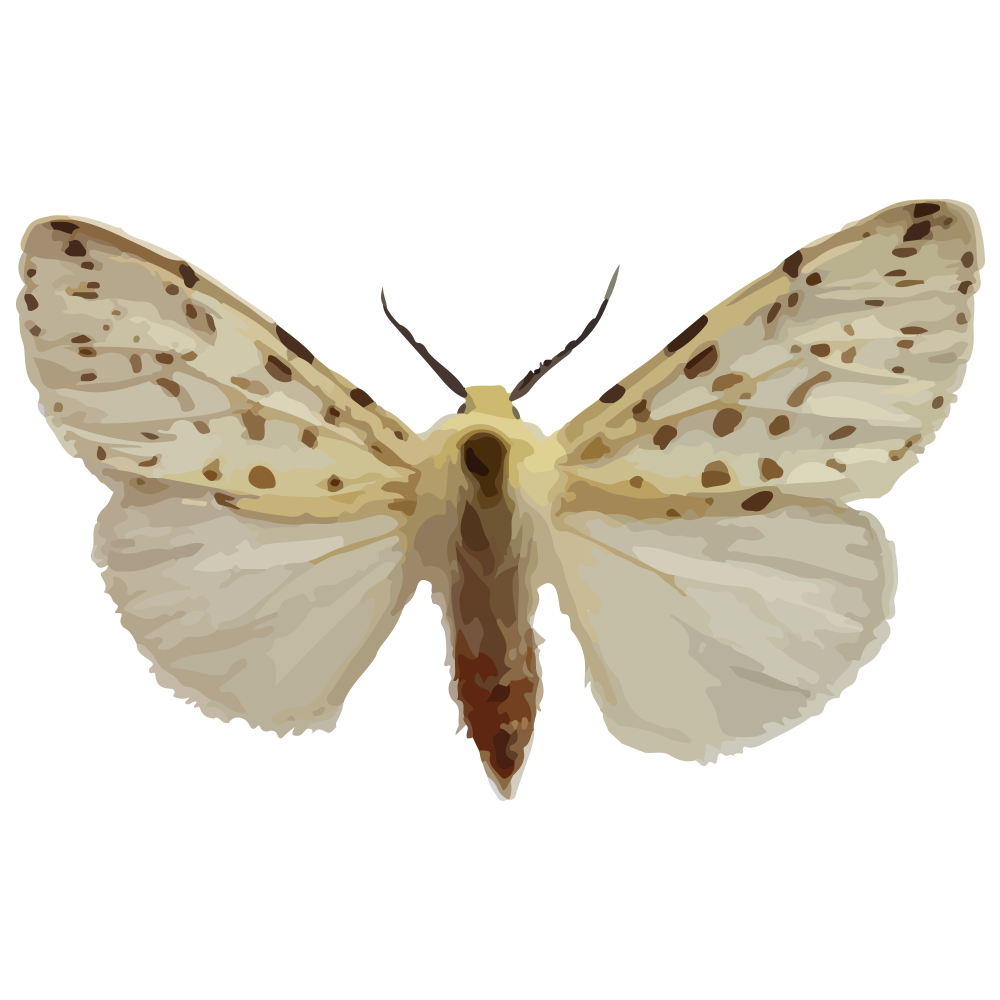
| 학명 | Hyphantria cunea |
| 일반명 | Fall webworm moth |
| 생태 | Adult moths are nocturnal and phototactic, ovipositing in clustered masses on leaf undersides. Larvae collectively spin silk webs to feed within them; initially creating translucent patches on leaves, subsequently consuming entire foliage leaving only veins. This insect is polyphagous, highly reproductive, and rapid-spreading—a quarantine pest of global concern—producing 2-3 generations annually. |
| 피해 | This pest primarily damages multiple forest and fruit trees including poplar, willow, elm, apple, and pear. |
| 분포 지역 | Invaded areas |
| 모니터링 | Pheromone lures mimic natural sex pheromones to attract male insects into specialized traps for population monitoring and suppression. As a core IPM component, monitoring enables early risk detection and targeted control. Mass trapping reduces mating opportunities to curb offspring populations. Protocols: ●Use only with matched traps. ●15-45 traps/hectare,replace/replenish every 4-6 weeks. ●Wear gloves or wash hands with detergent when switching lure types. ●Refer to trap-specific hanging instructions. |
| 추천 트랩 | Delta Trap, Wing Trap |
문헌 검토
인용 문헌은 화합물과 종의 정확한 관계를 뒷받침합니다. 제형, 비율, 담지량, 방출 속도 및 현장 지속 기간은 검증된 유인제 프로토콜에 따라 달라지므로 여기서는 추정하지 않습니다.
제품 선택 또는 맞춤 합성 프로젝트를 논의하려면 연락처를 남겨 주세요. 카탈로그 제품이 합의된 사양에 맞지 않으면 화학팀이 맞춤 경로와 스케일업 계획을 평가할 수 있습니다.
