参考文献
AndoLab List of Lepidopteran Sex Pheromones and Attractants
2026-07-26 edition, p. 229; Hyphantria cunea entry

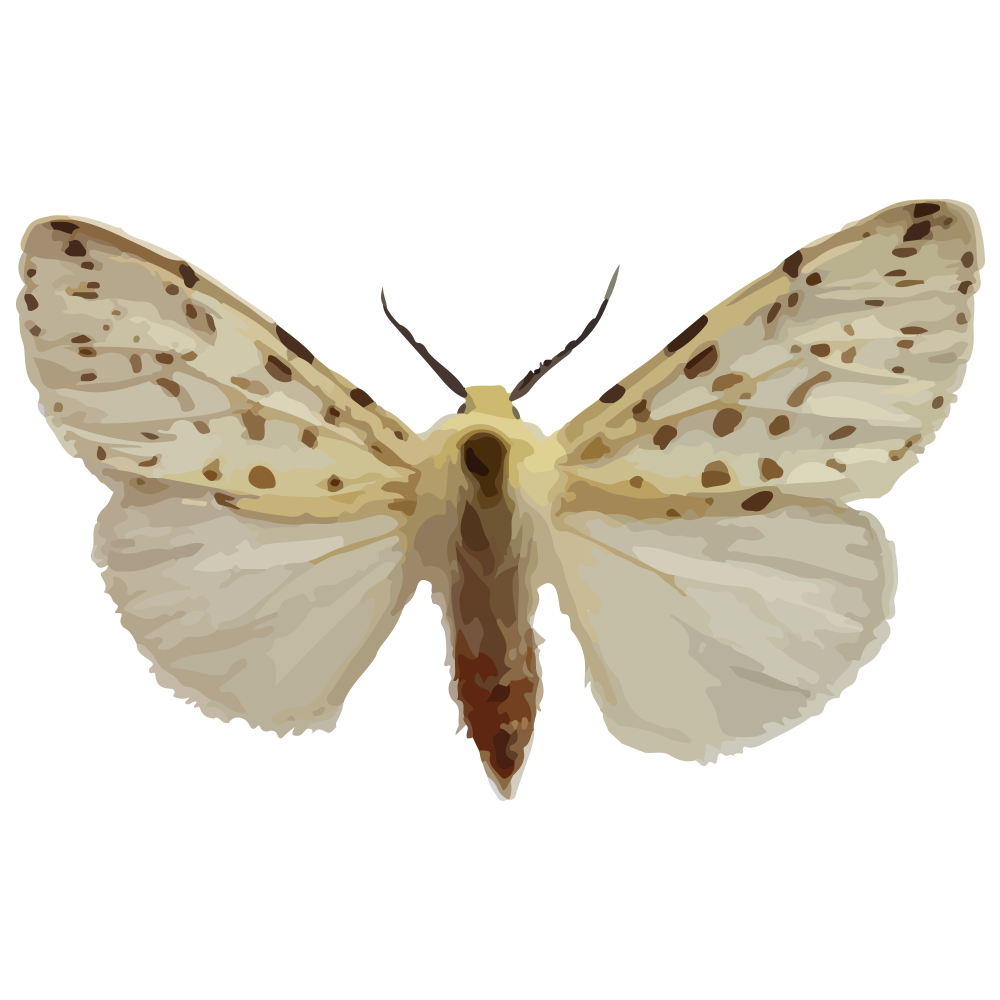
| 学名 | Hyphantria cunea |
| 一般名 | Fall webworm moth |
| 生態 | Adult moths are nocturnal and phototactic, ovipositing in clustered masses on leaf undersides. Larvae collectively spin silk webs to feed within them; initially creating translucent patches on leaves, subsequently consuming entire foliage leaving only veins. This insect is polyphagous, highly reproductive, and rapid-spreading—a quarantine pest of global concern—producing 2-3 generations annually. |
| 被害 | This pest primarily damages multiple forest and fruit trees including poplar, willow, elm, apple, and pear. |
| 分布地域 | Invaded areas |
| モニタリング | Pheromone lures mimic natural sex pheromones to attract male insects into specialized traps for population monitoring and suppression. As a core IPM component, monitoring enables early risk detection and targeted control. Mass trapping reduces mating opportunities to curb offspring populations. Protocols: ●Use only with matched traps. ●15-45 traps/hectare,replace/replenish every 4-6 weeks. ●Wear gloves or wash hands with detergent when switching lure types. ●Refer to trap-specific hanging instructions. |
| 推奨トラップ | Delta Trap, Wing Trap |
文献レビュー
引用文献は、化合物と種の正確な関係を裏付けています。製剤、比率、担持量、放出速度、圃場での持続期間は、検証済みの誘引剤プロトコルに依存するため、ここでは推定していません。
製品選定またはカスタム合成案件についてご相談ください。カタログ品が合意仕様に合わない場合、化学チームが専用ルートとスケールアップ計画を評価します。
