Insekten

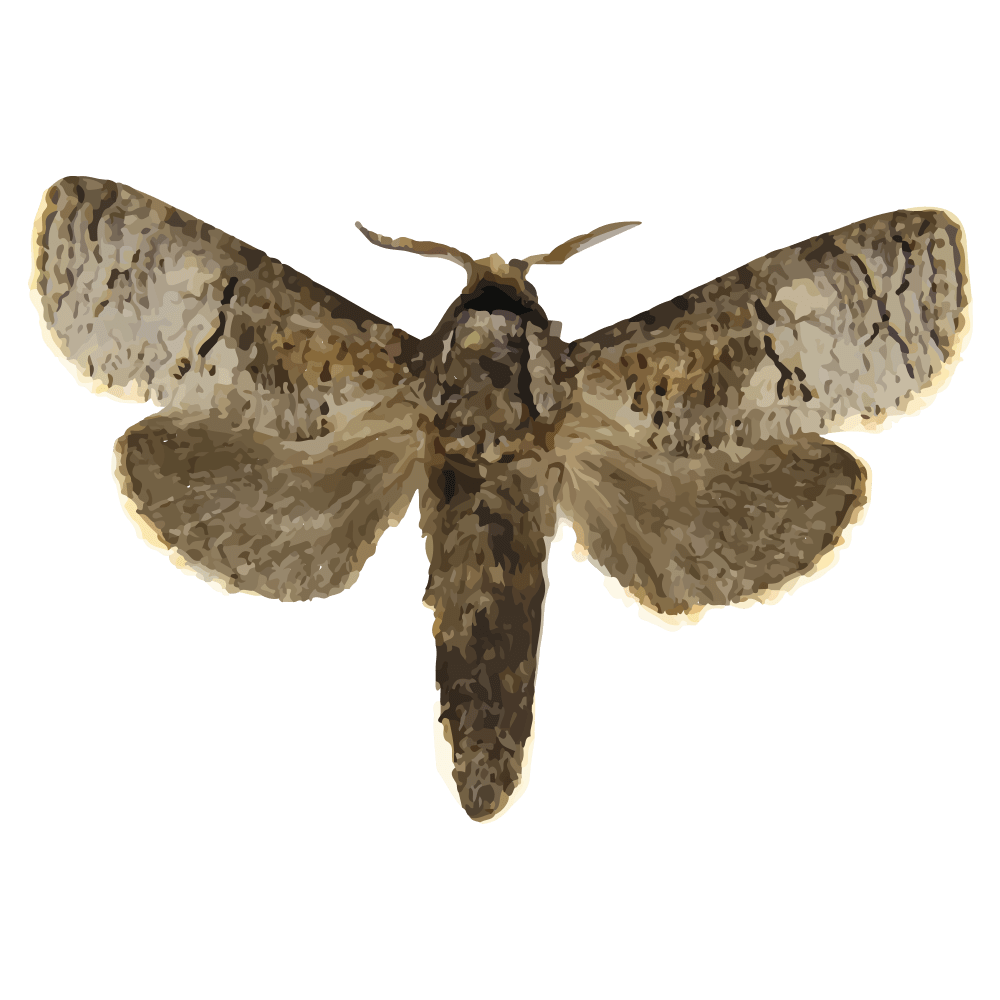
Holcocerus insularis

Carpenter worm (Holcocerus insularis)
Lateinischer Name Holcocerus insularis
Trivialname Carpenter worm
Biologie Larvae bore into the trunks or roots of windbreak and sand-fixation plants (e.g., Salix psammophila, Populus) at the base, forming longitudinal galleries that lead to tree mortality. This species completes 1-2 generations annually, overwintering as mature larvae within galleries. Adults emerge from June to August, exhibit weak phototaxis, and lay eggs in bark fissures or wounds. Newly hatched larvae directly bore into the phloem and tunnel into the xylem, with frass accumulating outside exit holes.
Schaden Primary hosts include wind-breaking and sand-fixing plants such as Salix psammophila, poplar, and Haloxylon ammodendron.
Verbreitungsgebiete Northwestern China
Monitoring Pheromone lures mimic natural sex pheromones to attract male insects into specialized traps for population monitoring and suppression. As a core IPM component, monitoring enables early risk detection and targeted control. Mass trapping reduces mating opportunities to curb offspring populations. Protocols: ●Use only with matched traps. ●15-45 traps/hectare,replace/replenish every 4-6 weeks. ●Wear gloves or wash hands with detergent when switching lure types. ●Refer to trap-specific hanging instructions.
Empfohlene Fallen Delta Trap, Wing Trap

Literaturprüfung

Semiochemische Nachweise

Die zitierten Publikationen belegen die genaue Verbindung zwischen Stoff und Art. Formulierung, Verhältnis, Beladung, Freisetzungsrate und Freilandwirkdauer hängen von einem validierten Lockstoffprotokoll ab und werden hier nicht abgeleitet.

Kontakt aufnehmen

Hinterlassen Sie Ihre Kontaktdaten, um Produktauswahl oder kundenspezifische Synthese zu besprechen. Entspricht kein Katalogprodukt der vereinbarten Spezifikation, kann unser Chemieteam eine kundenspezifische Route und einen Scale-up-Plan bewerten.