Insectes

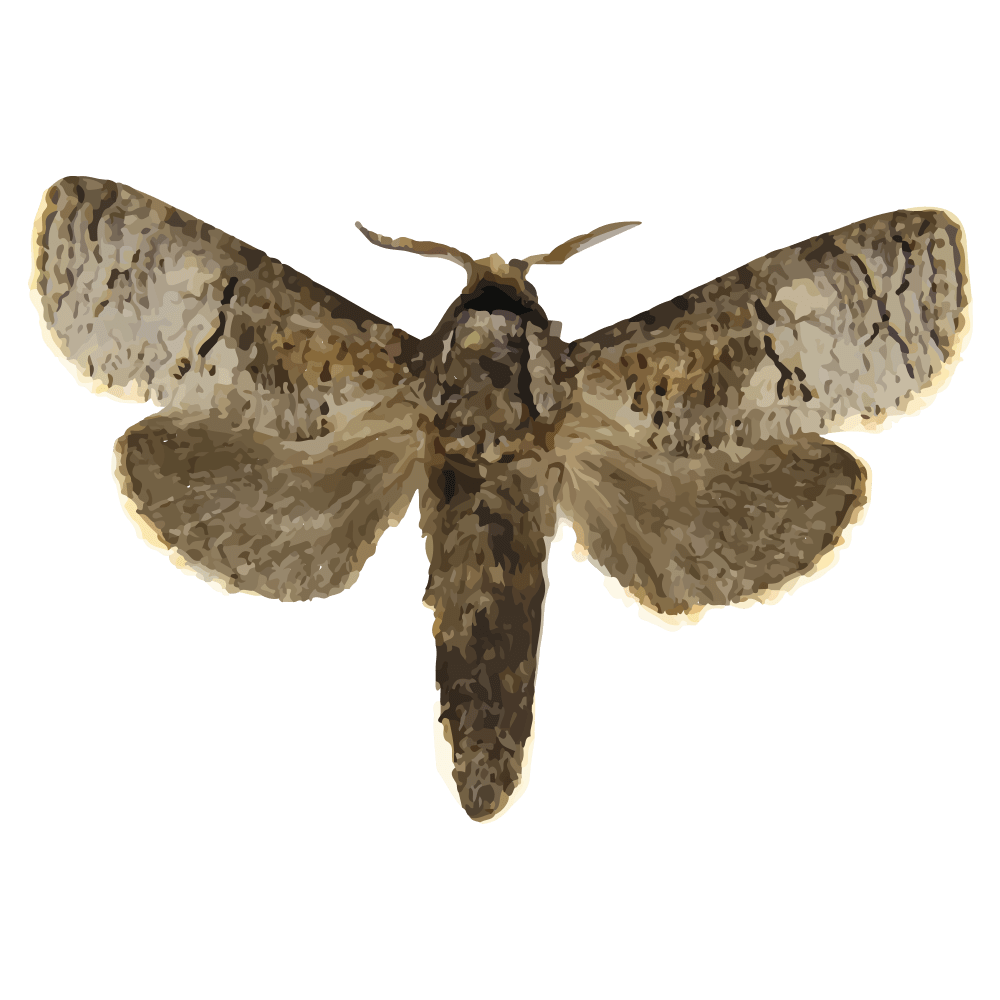
Holcocerus insularis

Carpenter worm (Holcocerus insularis)
Nom latin Holcocerus insularis
Nom commun Carpenter worm
Biologie Larvae bore into the trunks or roots of windbreak and sand-fixation plants (e.g., Salix psammophila, Populus) at the base, forming longitudinal galleries that lead to tree mortality. This species completes 1-2 generations annually, overwintering as mature larvae within galleries. Adults emerge from June to August, exhibit weak phototaxis, and lay eggs in bark fissures or wounds. Newly hatched larvae directly bore into the phloem and tunnel into the xylem, with frass accumulating outside exit holes.
Dégâts Primary hosts include wind-breaking and sand-fixing plants such as Salix psammophila, poplar, and Haloxylon ammodendron.
Régions de distribution Northwestern China
Surveillance Pheromone lures mimic natural sex pheromones to attract male insects into specialized traps for population monitoring and suppression. As a core IPM component, monitoring enables early risk detection and targeted control. Mass trapping reduces mating opportunities to curb offspring populations. Protocols: ●Use only with matched traps. ●15-45 traps/hectare,replace/replenish every 4-6 weeks. ●Wear gloves or wash hands with detergent when switching lure types. ●Refer to trap-specific hanging instructions.
Pièges recommandés Delta Trap, Wing Trap

Revue de la littérature

Données sémiochimiques

Les publications citées étayent la relation exacte entre le composé et l'espèce. La formulation, le ratio, la charge, le taux de libération et la durée d'action au champ dépendent d'un protocole de leurre validé et ne sont pas déduits ici.

Contactez-nous

Communiquez vos coordonnées pour discuter du choix d'un produit ou d'un projet de synthèse sur mesure. Si aucun produit catalogue ne correspond à la spécification convenue, notre équipe peut évaluer une voie et un plan de changement d'échelle dédiés.