
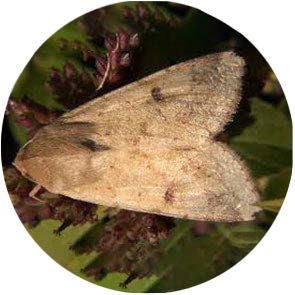
| Lateinischer Name | Helicoverpa zea |
| Trivialname | Corn earworm |
| Biologie | Adults are nocturnal and sensitive to black light traps and sex pheromones, laying eggs on plant leaves, flower buds, or fruits. Larvae are polyphagous, damaging leaves, flowers, fruits, etc.; infested fruits develop holes and are prone to rotting. This pest resembles Spodoptera frugiperda (fall armyworm) and exhibits strong migratory capacity, occurring more frequently in tropical and subtropical regions. |
| Schaden | This pest damages multiple crops such as cotton, corn, tomatoes, peppers, and soybeans. |
| Verbreitungsgebiete | America |
| Monitoring | Pheromone lures mimic natural sex pheromones to attract male insects into specialized traps for population monitoring and suppression. As a core IPM component, monitoring enables early risk detection and targeted control. Mass trapping reduces mating opportunities to curb offspring populations. Protocols: ●Use only with matched traps. ●15-45 traps/hectare,replace/replenish every 4-6 weeks. ●Wear gloves or wash hands with detergent when switching lure types. ●Refer to trap-specific hanging instructions. |
| Empfohlene Fallen | Delta Trap, Wing Trap |
Teilen Sie Ihre Kontaktinformationen, um präzise passende Pheromonlösungen zu erhalten. Sollte unser bestehendes Portfolio keine optimale Lösung bieten, initiiert unser Synthesechemie-Team eine kundenspezifische Entwicklung – vom Molekülstrukturdesign bis zur skalierten Produktion.
